1. It runs to the mouth of South Channel, with the tide, it meanders ’round, winding its way through the marsh’s waving grasses and soggy ground. It curves like a rippled gray ribbon, the sash on a satin gown, and touches the back of the island on the side where the sun goes down. Many red sunsets have lingered, high above this floating plain, and promised relief from the storms at sea – from the waves, the wind, and the rain.
2. The Uchee walked on Tybee, long before the Spanish came. The Itza-Maya, ‘Taube’* means salt, and the island was named the same. Though fearsome pirates ventured here whose deeds became renowned, where Blackbeard buried his treasure, dear, has never yet been found. While pirate days were numbered, also, French and Spanish gain, the English anchored at Tybee, determined to remain.
3. The founders envisioned Savannah: ‘No tenured property – a viceless, yeoman’s utopia; no rum, no slavery.’ Then trade in Chatham began to fail, and small farms, but survived, while over in South Carolina, the rice plantations thrived. As loss and disenchantment overshadowed past convictions, they offered the land grant titles, and lifted the slave restrictions.
4. For years, when ships reached Tybee Light, they’d stop at South-Channel Sound. They’d unload the sick and the dying, both the free, …and the bound. They’d leave them here, where this little creek, still far from Savannah town, touches the back of the island on the side where the sun goes down …at a place called ‘lazaretto,’ where a quarantine would hold all the ones with dreaded diseases, and the ones too sick to be sold.
5. While great blue herons nested out beyond the island’s view, mosquito swarms would buzz and bite ‘til evening breezes blew. Windswept cedars,… and pines,…and palms, and crooked oak trees spread … alms of mercy at ‘lazaretto,’ like a summons to ‘raise the dead.’ Though comforters braved the perils, and full moons waxed and waned, there was no such ‘resurrection,’ for the dying who remained.
Refrain 1: Lazaretto! Here, beyond the stormy sea, was no promise for tomorrow, in your sunset reverie? Why must these things be so? What hope can ever be, as we lie here, Lazaretto, to rise again and be free?
6. Now, the South had known misfortune, but the price was high to pay, when the Union armies marched right in, and took it all away. Though Sherman spared Savannah, the flames that others knew, the way of life was ended …and the means of living, too. While great plantations emptied, and fields were laid so low, the slaves were freed, but many stayed. They’d nowhere else to go.
7. But the worst they’d fear on Tybee now weren’t fevers, but hurricanes, and the days of the quarantines would close, leaving the last remains of the site where many perished, tide-washed and over-grown,… while rails were laid, then a road was made, and seeds of progress, sown… Nothing survived to mark the graves of the souls lost in that place, —nothing perhaps, but a secret mark, that time cannot erase.
8. Today, the bridge that spans the creek affords a scenic view of the waters off Cockspur lighthouse, as they rush to the ocean blue. Here, the island ‘shrimpers’ dock, and nearby, dolphins play, While hungry seabirds circle low to scavenge what they may, …and out on the west horizon, where the miles of marshes grow, the sunsets still do linger as they did so long ago.
9. Many tales are told of those who’ve walked these timeless beaches, and the ways of former slaves live on where the GeeChee culture reaches. The creek still curves like a ribbon, as it winds along with the tide, though it cannot tell a single word how any have lived or died, but at times out here, there’s a sound on the wind, the voice of a memory, that fills the heart of these marshes, like the tide that’s up from the sea,
Refrain 2:“Lazaretto, …many things should never be, as the deeds and reasons sleeping fill the pages of history. Yet, there is no doubt as the years rush out to meet eternity, they who lie here in the depths below, asleep in mystery,…
10. …may also hear that trumpet blow beyond the stormy sea, —down …where your waters flow the day you set them free, —down, …where your waters flow on the sundown side of Tybee.…Like a witness, Lazaretto, you wait so patiently, —a witness, Lazaretto, wait and see...”
*The name Tybee is derived from ‘Taube,’ an Itza Maya/Apalache Creek/Itzate (Hitchiti) Creek word that means ‘salt.’)
Copyright 2001-2026, Cynthia Farr Kinkel, All Rights Reserved
A few years back, after extensively researching the history of Lazaretto Creek, I wrote two articles that appeared in the December 2005/January 2006 issues of The Tybee Breeze Magazine for a monthly column known as “Notes from a Tidewriter.” Of course, there may be individuals on Tybee and elsewhere who could add more accurate details even now, twenty-five years later. I don’t presume to know any particulars other than what I’ve previously written. That January’s article also included “A Song for Lazaretto,” a poem I wrote in 2001, and turned into a song that was originally intended to be a ballad about a forgotten episode of early American history. Portions of the poem have been republished with permission by author Leigh Ebberwein in The Savannah Gondolier, Old Fort Press, Savannah, GA, U.S.A., (2022). The poem along with the personal narrative that accompanies it, as well as the historical account of the history of the quarantines, have been revised and republished several times.
Some people label the poem a ghost story, given the peculiar little twist of how it came to be written, and while I agree it qualifies, I must confess, I’ve never encountered a human ghost, at least not the kind that people claim walk among us as souls of the dearly departed, but as the bitter cold of an Ohio winter piled snow high outside the basement windows I did experience what might be described as a ‘visitation.’ It caught me off guard, but whatever happened, it cured my writer’s block once and for all. Never again will I put off writing when ‘inspiration’ calls. The events below are true but as feelings are subjective, the reader’s free to decide:
Emma Thompson Kelly Dec. 17th, 1918 – Jan. 17th, 2001
Savannah Morning News
It was January of 2001, the eve of the death of my family friend and mentor, Emma Thompson Kelly, —Johnny Mercer’s “Lady of 6000 Songs.” She had just been awarded the Proclamation of Georgia’s Entertainer of the Century at her eighty-second birthday party at Hannah’s East on December 17th, 2000. It was her last public performance. By the way, author John Berendt devotes an entire chapter to this regionally beloved character in his first novel, Midnight in the Garden of Good and Evil, published in 1994.
‘Miss Emma’ established regional notoriety throughout the last half of the twentieth century by traveling and playing all over the Southeast. By the time the rest of the country discovered her in the mid-nineties, in John Berendt’s novel, Emma Kelly had long been adopted by most native Savannahians as one of their very own. Since the days of her friendship with the late and legendary songwriter Johnny Mercer, the one who initially affirmed her, and decorated her with the celebrated tag name, she’d tirelessly worked her musical magic in Savannah, and given much of her life to the city. But Statesboro, Georgia was Emma’s hometown.
Most folks who can remember will tell you that besides the daily out of town trips to dance circuit engagements, military bases and clubs, Emma also played for almost every social event up in Bulloch County. This included Kiwanis, Rotary, Lions and Country Club affairs, weddings, school plays, and church services, not to mention every dance recital, talent contest, and stage production in town. Though she constantly burned the candle at both ends, she always seemed to effortlessly enjoy what she was doing. Her rare talent was always available to the locals both young and old, especially during the earlier years when her ten children, all musically talented as well, were growing up in Statesboro.
I also come from a family of musicians. My great Aunt Mary kept her piano in our living room. That’s where I first learned to play by ear, just like my Grandpa. My sister played clarinet. My brother played the drums, and still does. Both of my parents sang (although Dad forgot what a nice voice he had once he became a ‘workaholic’). Momma, who passed away at age 89, had a beautiful voice. In my youth, she and I used to sing together at community affairs. Occasionally, I sang alone. ‘Miss Emma’ was always the accompanist, and because she was also a dear family friend, when she came over to practice, sometimes she’d stay all evening. I remember watching her play, and wanting to be just like her. She had such a gracious way with people, unlike anyone I’ve ever known, and she was always ‘the encourager’. When Emma played for you to perform, no matter what went wrong, she’d hang in there with you, and give you the confidence to pull it off. She’s one of the main reasons why I ever sang, and played the piano professionally.
The last conversation I had with her was in the summer of 2000, a month after she’d collapsed from heat exhaustion during a Fourth of July performance in Savannah’s Forsyth Park. She told me she was slowing down, getting tired (imagine that!), but how excited she was that all of her recordings had finally been released as a CD. She asked me if I had been doing anything with my music or my writing. I was proud to tell her about our band’s CD release in 1999. She said that I had better get over to see her at Hannah’s next time we were home. Around Thanksgiving I learned that her health was failing fast.
In late December I called again to inquire, but was told that she’d collapsed again after her birthday party on the 17th, and had to go to the hospital. When I finally got through to her agent, Louis, he said she’d just gotten home only a few moments before, but was still too ill to talk, and had gone straight to bed. I told him to tell her that I’d called, and to give her a big hug. I just knew that she’d recover and be back at it again, like so many times before until my Mom called to tell me she was gone. Before I received the newspaper clippings from home, I’d read about the funeral in the Savannah Morning News online. Suddenly there was a big empty space in Southeast Georgia, and I was hardly the only one feeling it.
Anyhow, the day before Emma died, a winter storm howled around our Silver Lake home in Northeast Ohio, and as it seems writers just have a way of accumulating the written word in every form imaginable, (and pack rats eventually do run out of storage space), I was downstairs in our basement carrying out a New Year’s resolution to clean out my desk. As I sorted through papers, pictures, and junk mail that had accumulated in the middle drawer, I came across a small pale-blue pamphlet. Immediately, I remembered picking it up at the Tybee lighthouse and Museum the summer of 1999. As a Georgia transplant with family near the coast, I was always grateful to be able to visit, and we usually did so with the kids each year. This little piece of Tybee provided a warm and familiar diversion on such a chilly day.
It contained a short summary of the history of the island, much of which I knew, but much to my surprise, it also mentioned “a quarantine” that once operated on the far west side, —it was just a brief notation, and though I’d grown up in the area and been visiting Tybee since my youth, it was news to me. As research usually took precedence over cleaning, I abandoned my project, and pulled out my southern history books. It was about that time that my sister and I were researching our family’s Patriot roots, so I had plenty to choose from, and websites to investigate. I spent the rest of the evening reading not about the lazaretto, but about the founding of Savannah, trade and shipping in the eighteenth and nineteenth centuries, and the early years of colonial life in Coastal Georgia. I decided I might find more information about the quarantine at the local library, and spent the better part of the next snowy afternoon scouring books and public records only to discover this wasn’t just one of the most sparsely documented of historical sites, but the details surrounding it seemed non-existent. I gathered what I could and headed home.
That second evening around 9:30 p.m. after everyone else was in bed, I went back to the basement, finished putting my desk in order while organizing my thoughts, and sat down to write. I’d decided to compose something about what I’d read of the history of Savannah, and the surrounding area including Lazaretto Creek. Of course, I’d always enjoyed the beach, the down-front scene, eating in island restaurants, biking, swimming, crabbing and fishing, boating on Back River, even sailing off Tybee’s North End in a Hobie cat, but I’d never set foot in the marshes or gone on a dolphin tour. So, I purposed to describe the place as best I could, knowing from experience that if you’ll just start writing, the tale eventually unfolds…
I’d barely gotten the words of the first two lines down, when a strange thing happened. As soon as I began to identify with someone who might have been quarantined, I began to feel uneasy, and what began as a slight tingle, turned into something that I can only describe as a ‘depressing heaviness,’ —then as if someone had slipped up beside me and tapped me on the shoulder, there was a whisper in my ear.
The words were gibberish, but suddenly, I was shoulder-deep in murky rushing water with tall green grasses all around; the shell-banks smelled of salt, and much to my horror, I was being sucked down by the undertow. For several anxious seconds, I felt I was drowning, and overcome with a disconcerting urge to vomit. Then as suddenly as it came, the sensation was gone. I sat there wondering if maybe I was coming down with something. Or was it a heart-attack? A stroke? Some type of “sympatric” reaction? — Even now, I don’t recall as a writer, experiencing another such an incidence of unsolicited sensory perception. Whatever it was, it was very real.
A few minutes later, feeling myself again, I went upstairs for a drink of water, and hurried back down to my computer to read over what I’d typed:
“It runs from the mouth of South Channel, with the tide it meanders round.”
It wasn’t late, and I was anything but sleepy, so braving the elements and the subject matter, I decided to keep writing in case something else happened. Except for the fact that I couldn’t stop the flow of the ten-versed poem that emerged, the rest of the night was “uneventful.” Next day, my mom called from Georgia to tell me that Emma Kelly had died.
Now, I don’t believe for a minute my rather clairvoyant experience had anything to do with Emma other than the fact the eerie incident served to mark her passing for me. The strangest thing was that exactly one year later to the day, January 17th, I found myself living on Tybee Island. In the months that followed, I thought about “Miss Emma” every time I passed the Pirate’s House in Savannah where she’d played at Hannah’s East, wishing I’d been able to see her once more before she died. And each time I crossed Lazaretto Bridge that first year, or drove Highway 80 East through the marshes, I flashed upon that night in the basement.
It wasn’t until 2005 however while working on a column for The Tybee BreezeMagazine that I learned the place where the fishing fleet currently docks was, in fact, rumored to be haunted. People didn’t talk much about it, but while chatting with friends at a local bar one evening, I was shown a Savannah Morning News article that reported skeletal remains being unearthed at the time the pilings were dug in 1956 for the new steel bridge over Lazaretto Creek. Being seven when it was printed and apparently buried in local newspaper archives, I’d have never thought to look for it from Ohio. Another individual mentioned lepers living in certain places on the island in conjunction with the quarantine. Still another chimed in to tell me about a recent scare they’d had in an old house on Officer’s Row known as the Marshall House on Tybee’s North End.
While completing a six-month series on historical pirates as a promotion for the island’s first pirate festival, I’d talked with Paula Devivo about doing a series called “Ghosts on Tybee,” —you know, for quieter winter nights? I mentioned I might have something to get things started, but after hearing about the incident at the Marshall House, I thought to start with Officer’s Row. Then, I remembered, it being the holidays, the owners were likely out of town, so on a whim, I ended up at Lazaretto Creek. As I walked around that afternoon, I learned that long-time owners at the marina claimed to have seen at least one dark figure with tattered clothes walking out on the docks in the wee hours at night. I was also told that on two occasions, such a figure walked right into the establishment, stood and stared in silence, and disappeared, —a mystery to this day…
I guess if ever a place had reason to be “haunted,” this might be one. Granted, it isn’t Gettysburg, Hiroshima or Dachau, or a place where millions suffered, and I don’t wish to labor the point, but brutal necessity paid a brief, costly visit to Lazaretto Creek – another lonely little corner of the world, where outcasts perished. In those days, there were others along the eastern seaboard including Charleston, Philadelphia, and New York, and for anyone on the outskirts of the New World after traveling across the vast ocean in hopes of finding a better life, it was a miserable fate. Now, imagine being a victim of the African slave trade, torn away from loved ones and homeland, thrown into bondage and now languishing in chains from an illness you’d possibly contracted while lying in the stench and filth below deck with the rest of your unfortunate comrades.
Granted, the poem I wrote that snowy night in Ohio was influenced by what I “felt and believed,” but try reading it on those docks at sunset, then, tell me how you feel.
Lazaretto Creek Marina; Memories of Captain Mike; Lost Souls
Captain Mike Scarbrough and his wife, Iris, first moved to Tybee in 1992, hoping to build a future with their young daughter, Lisa. They bought their property out at the Lazaretto Creek Marina from W.G. Smith, a local resident and fisherman who owns and operates the vessel known as the Agnes Marie, with his partner J. B. Griffle. The premises needed so much work that Iris says her initial response was just to hop in the car and head back to Atlanta. She recalls turning to Mike, and cringing, “Are you sure we really want to do this?”
The Scarbroughs worked a year or so restoring the docks and the old buildings at the marina while living on their boat, and eventually, converted a small house near the water into a bar with an office. They called it Mike’s Place. According to Iris it wasn’t much to look at, in fact, she says it was ‘a dump’ — if they had five customers on the weekends, they thought they’d been ‘discovered.’ Mike’s Place only served sandwiches, prepackaged snacks, and beer, but the fishing crowd at the docks always appreciated the little bar, and the regulars were friendly. The Scarbroughs continued to reclaim the grounds, and started a dolphin tour business, and over the course of the next decade, things really began to shape up. A seafood market also opened in another one of the buildings.
The fact that Lazaretto Creek had a few skeletons in its closet was never an issue for hardworking locals who took things in stride. However, both Mike and Iris were quick to mention that several strange things happened during the first years they lived on the property.
There are two incidences in particular. The first took place one night around three in the morning, when Mike happened to look out a back window of the house toward the creek. He thought he saw someone walking around on the dock — maybe, a couple of people. No one was supposed to be out there that time of night, so Mike went to investigate. He headed down the plank walkway, ready for a confrontation, only to discover that no one was there. No one was anywhere around. Mike said he stood listening for a few moments to see if he could hear anything, but all was quiet, and there was no sign that any boat had left the dock. “For the life of me,” he said. “I couldn’t figure out where they might have gone.”
The second incident happened sometime later when the Scarbrough’s daughter, Lisa, was in high school, and had a friend over from Savannah. They were sleeping in Lisa’s bedroom about three o’clock in the morning, when the friend was awakened with a start. Glancing around, she said she saw a tall, wide-eyed Black man in a tattered dirty shirt standing in the doorway of the room. She grabbed Lisa and shook her, and the two of them woke Mike and Iris with their screams. The lights came on, but a thorough search turned up nothing. It was the last time the stranger was seen inside the house, but Mike had to stand vigil for a while so his daughter could get to sleep.
In 1995, the marina hosted the U.S. and International Team trials, and in 1996, the yachting events of the Summer Olympics were held there, but it was when Mike took a group from Good Morning America out on the S.S. Dolphin for a tour, that his “Dolphin Adventure Tours” really took off. Captain Mike and First Mate, Iris, decided it was time to let someone else take over their eatery at the marina.
Joel Solomon moved in at Mike’s Place, renamed it “Cafe Loco,” and added live music on the weekends. Working late hours, after the musicians and the employees left, Joel would soon have his own encounter with the Scarbrough’s eerie night visitor. Alone in the bar after closing one night, he was cleaning behind the counter when he heard a noise and looked up to see a man whom he didn’t recognize standing just inside the entryway, — an African American man wearing strangely tattered clothes. He didn’t come into the bar; just stood there for a moment like he was lost. Joel raised his voice to say he was closed, and was about to ask if the man needed help, when the man turned and slowly began walking beyond the inner wall as if he were headed to take a seat in one of the booths. When Joel left the counter to make sure his message was clear, the front room was empty. The main door, secured earlier, was still locked. According to Captain Mike, it prompted Joel to search the premises up and down before leaving.
There’s been speculation throughout the years about the whereabouts of the mass grave sites associated with the quarantine. It’s generally believed the old buildings stood in a fairly protected area, near the river channel under the trees. If there were unmarked graves toward the marsh itself, most likely they were washed away by the tides throughout the years. It’s also quite possible that graves were located where the new bridge now stands, and were unearthed when it was constructed. The Savannah Morning News article reported bones were discovered in that location, bobbing up from the ooze.
The Scarbroughs said a group from England showed up a few years back, looking for the unmarked grave of a British soldier whom they believed was buried somewhere on the grounds. Members of the group searched diligently, but in vain, in fact, to this day, no remains have ever been located in or around the present-day grounds of Tybee Marina or in the adjacent hammocks. Considering there was over a hundred acres in the original tract bought from Josiah Tattnall in 1767, —a lot of ground to cover, —and though current efforts are underway to further commemorate the site, and possibly rescue what has yet to be discovered, most locals doubt future searches will turn up more than continued speculation.
To my knowledge, the ‘ghost’ who paid the three a.m. visits to the Scarbroughs and Joel Solomon hasn’t been seen lately. Iris once said it was probably because of all the ‘live’ activity on the premises at night. Captain Mike’s Dolphin Adventure Tours celebrated twenty years on Tybee in 2012. Though Mike passed away in 2021, and Iris Scarbrough in 2019, the business they pioneered continues to operate successfully, in fact there are now two dolphin tours out of Lazaretto, including Captain Mike’s, and Captain Derek’s. By that time, Joel Solomon had already sold Café Loco, but the location has faithfully housed two restaurants since – Coco’s Sunset Grille, (now closed), and Bubba Gumbo’s, a long-standing local favorite. Established in 1997 by marina owner, Paul Burns, it closed for a decade, and reopened in 2015. These days, besides Bubba Gumbo’s, the marina hosts both dry stack and wet boat storage, a bait and tackle store, laundry facilities, and access to Topsail Bar & Grill. In short, it’s seasonally flooded with fishing and water sports enthusiasts, hungry tourists, and excited sight seers.
I don’t purport to have knowledge about what else locals have encountered out there at night, although there have been reports of UFO/UAP/USOs zipping across the marsh. As Iris said, maybe there are just too many people around these days for a ‘lost soul’ to feel comfortable.
RIP, all.
* * *
*Copyright 2012-2026, Real Spooks/Cynthia Farr Kinkel
(Portions of the above also story also appeared in The Tybee Times, 2009)
Southside-view of the house with the new screened porch – Summer of 1973. (The pond is off to the right.)
A Season of Visitations
The first weekend of June 1972, my daddy was going to Screven County and said he could help me put some things into storage if I wanted to drive out later after class. I’d started summer school with a lighter schedule, and again, would be forced to drop out, but on this pleasant Friday, I seemed to be holding my own. Clothes, books, and other possessions I’d abruptly left at the pond were now boxed and shuffled into the rear bedroom, and it was time to go through them. Daddy would be leaving after supper, but since the folks up at the farmhouse were just a local call away, I packed with the intention of staying a night, or two, depending on how I felt once I got out there.
Late spring was a special time in the country. It was already hot, but nothing like the steam furnace of July and August. The dirt lane through the field was dry and dotted with spindly weeds. The rows on both sides of it were ankle-high with corn and soybean plants. From the gate on, flowering chickweed, dandelions, and ripening blackberries lined the berm. The woods were lush with fresh undergrowth. The fragrant pines sported new cones. As you neared the pond, you caught only glimpses of the glistening water up ahead through the trees, but without a doubt, you could smell it.
As my car emerged, Sweetie was already running to meet it, barking loudly. Granddaddy hailed me with his boat paddle. Daddy waved and nodded toward a new aluminum storage shed he’d recently hauled in. He was talking about scheduling time to pour the concrete for a covered carport and thinking about adding a screened porch to the front of the house.
The Dock And The Pond – June of 1972
As usual, I parked my yellow Maverick near the door, and Sweetie followed me inside. Upon initial assessment, the stack of boxes in the rear bedroom might take time to clear, but the front bedroom looked the same. My tie-dyed linen curtains still hung in the rollout windows. The dayglow blues, greens, and sunburst reds and yellows, were as vivid as ever. Carolyn and I, and one of my trailer mates had hand-dipped them two summers ago. They’d turned out so well that we’d gone on to dip every cotton garment we could find, and much like the sand candles, the results were most gratifying. When I moved to the pond, the curtains went with me. When I left, they stayed for a while. Eventually, the trailer in town would also make it out, but for now, it was occupied by my daddy and my brother who was home from school for the summer.
Tossing my bag onto the bed, the dog and I walked outside to the dock. Daddy and Granddaddy had already caught a mess of fish, enough to fry for supper, so after a shot of bug-spray to keep the skeeters away, the dog and I set off on a quick hike to the far side of the dam. From there, you could see … and hear … everything. And if you sat quietly and waited long enough, above the sound of water falling into the spillway, you could catch all of the critters that went silent upon your arrival start back talking again. By dark, their conversations would drown-out everything else, but today was not the day to wait around to listen so we headed back to the house.
It was easy to sort through the clothes in the back bedroom. I wore the same ones over and over—jeans, jean shorts, tee shirts, tennis shoes, sandals,—most of which were already in town. But there were plenty of knickknacks and keepsakes to repack. And record albums, forty-fives, eight-tracks, cassettes, I’d been collecting since grammar school. Letters, cards, posters, and photographs, and stacks of hardcover and paperback books—textbooks, art and music books, how-to manuals, novels, and newspapers and yearbooks, and publications like The Great Speckled Bird, National Lampoon, Mad,Rolling Stone, and my college newspaper, The George-Anne. These had come directly from the trailer. I hadn’t planned on unpacking them until I had another ‘home’ in which to put them, but right now, it wasn’t happening. Besides, I had to get well first, and evidently, I’d succumbed to some mighty worrisome ailments.
As I sat cross-legged on the floor, I came across a little book entitled Thought Forces—Essays Selected From The White Cross Library written by Prentice Mulford and first published in 1913. My London friend, Chris, gave it to me the day before the Amesbury accident. I’d meant to give it back, but I never saw him again after I left the ward at Salisbury. Much like The Power of Positive Thinking by Norman Vincent Peale, only written many years earlier, it speaks of the strong influence that personal thoughts have on physical and spiritual wellbeing, stressing the importance of learning to control one’s thoughts as a matter of life and death. These were ideas worthy of serious consideration—far more than I’d presently given them. Similar to what I’d done with clairvoyants like Edgar Cayce, and spiritualists like Mary Baker Eddy at the time, I’d cherry-picked the parts I liked and closed the book on the rest.
Thought Forces – Prentice Mulford – Twenty-Seventh Impression, First Published in 1913, Second Selection by G. Bell and Sons, LTD, London
Growing up, I was tagged, “multitalented, impressionable, serious-minded, strong-willed.” More likely it was a polite way of saying I chose drawing, story-writing, playing piano, reading books, and daydreaming over solving word problems, or paying attention in class, and I used to be late, a lot. While my visual artistic gifts were especially distracting, music played a major part. By age three, I was singing and reciting narrations. At age seven, when my mama’s Aunt Mary left her upright Story and Clark at our house, I composed a little ditty and wrote it down note-by-note. My folks recorded me playing it on the piano, and sent it off to have it pressed into a record, but I played everything by ear—even after Mama took me to piano lessons, in fact, I didn’t learn to sight-read staff-music until I was in college. But when rock ‘n’ roll came along, learning and playing by ear, I jumped on board. It was the same with every other genre over the years—whether I ever managed to perform them or not, I learned them. Supposedly, righthanded, I played guitar upside down and backward, and when I played piano, my left hand always seemed to pick up what my right hand was still trying to figure out. Some might call it, “semi-ambidextrously impaired.” Looking back, I’d call it multi-minded, lacking in self-discipline, and maybe a center of reference. At any rate, no one direction seemed right.
The old Story & Clark /My first piano – 2010
My sweet mama was a music lover, and a singer. She sang at music club and church, and at times with local legend, Emma Kelly. At times, she sang with me,—at church, in local Kiwanis Kapers productions, and at various social events. She started working at the college when I was nine as Assistant to the President, and moved to the music department when I was ten. I recall her bringing home a xylophone. I had to slip outside to play it because we kept it covered on the porch—there was no place to store it in the old music building on campus. They’d just completed construction of the new fine arts building the summer I started college. My freshman class was first to set foot in it, but long before I got there, I knew a lot of music students, not to mention, Gran also worked at the college. She punched cafeteria meal tickets, knew many of us by name, and all of the house mothers were her card-playing friends, which meant there was no getting in trouble without the whole place knowing about it.
And my daddy did accounting work for everybody in town, and traded out services with many of his business clients including gas stations, clothing stores, movie theaters, and restaurants. When anybody in the family needed something, we just signed the receipt, and the amount was deducted from what the merchant owed. Of course, that allowed Daddy to keep up with everything I did. Some might also call it middle-class, small-town privilege, of which, for a season in college, not only was I ashamed, but did my best to personally disavow and condemn, much to my daddy’s consternation. See, he was what they used to call a “self-made man”—hardworking, resourceful, generous. As a youth staying with the aunties, he caught a ride to Dover every day to take the train back and forth to attend high school in Statesboro; worked at the movie theater as a ticket-taker/concession clerk on the weekends; and was awarded the title of “Best Dressed” his senior year with only two nice shirts, everyday trousers, and a dozen pairs of socks to his name. Believe me, my workaholic ‘daddio’ paid for every dime that I spent, and seldom complained when I took it for granted.
Nor did he complain too much when I failed to acknowledge that an honest protest movement with a message of ‘peace and love’ was fast devolving into a gospel of envy and strife. Blinded by sentimental idealism, I vehemently refused to even discuss the possibility that Marxism could masquerade as socialism until everybody got screwed. The day he tried to explain it to me, I accidentally slammed his hand in the door on my rush out of the house, but he was right, and the fact is, my friends and I could have never ‘played’ at being socialists without his financial contributions to our lifestyle. All I can say is he must have had the patience of Job and loved me a lot to put up with my foolishness.
Other books caught my eye.The Little Prince by Antoine de Saint-Exupéry had been given to me as a birthday present, as well as Walt Whitman’s Leaves of Grass. I’d purchased The Book of the Law by Alister Crowley, and Lady Sheba’s Book of Shadows by Jessie Wicker Bell at a bookstore while researching the topic of witches for an American Literature class and a term paper on the works of Nathaniel Hawthorne, in particular, the short-story, Young Goodman Brown, a tale that first appeared anonymously in the April 1835 issue of The New-England Magazine, then under the author’s name in a collection published in 1846 entitled,Mosses From An Old Manse. When it comes to piercing the darkness, Hawthorne’s one of my favorite authors. He might have gotten to me as much as Ray Bradbury that quarter, had I not been so distracted. It’s a wonder I finished the paper.
In one of the publications I read on the modern-day practice of witchcraft, the writer had coopted a line from The Little Prince that reads, “You’re responsible forever for what you have tamed.” While I agreed with the concept of individual responsibility, I questioned the idea that anything could necessarily be tamed. I got the “Do what thou wilt”part, too, but had I ever found a coven to join, I’d have been more interested in communing with nature than controlling spiritual forces or mastering spells. I was into ‘vibes’ and herbs, not magic. Thrilled by the prospect of venturing into the unknown in search of hidden wonders, I used to make solo treks through the field next door to the house where I grew up, bold excursions into the woods across the way, and arduous after-school bicycle rides to the library for anything I could find in the ‘youth section’ that smacked of clandestine or scary.
In October of seventh grade after seeing the movie, Village of the Damned (1960), which showed at the local cinema in the summer of 1961, my friend, Marty, and I, ceremoniously, on Friday the 13th, wore black dresses, and carried red roses to school, and didn’t speak to anybody but our teachers even at recess. That afternoon, we lit a candle in her parents’ attic expecting somethingunseen to extinguish it, and vowed to let ‘witches out of our closets’ that evening. Since we decided they should be free until midnight on Halloween, upon arriving home after a full night of trick ‘or’ treating and fun at the school carnival, each of us stayed awake long enough to order them back into our closets and into the ether. Granted, we never told anybody about that part of the plan, but our silent black day at school was enough to raise eyebrows—no doubt our curious classmates thought we were “oddballs,” but we were dead serious. We figured, according to the law of appeasement, if you treat them right, witches will leave you alone.
Everybody laughed about it later. When the original pilot episode of The Invaders, “Beachhead” aired, our interests switched from invisible witches to invading aliens. We’d seen lots of movies like The Day the Earth Stood Still and The Blob, and T.V. shows like The Twilight Zone, but this one was different, in fact, it was the main reason for the switch. Strangely enough, though the date of the initial showing is disputed online, and I could be wrong, I distinctly remember seeing it on a Sunday evening in late 1961 or early 1962. My friend, David DeLoach, who sat behind me in class, saw it, too. We talked about it incessantly. The Quinn Martin T.V. series didn’t air until years later in 1967. Go figure.
Lucky, for me, in those days seventh grade teachers knew what to do with the overactive imaginations of their students. Not everybody got picked to decorate the hallways for the holidays, like I did, or allowed to write and direct a Christmas play for the school assembly complete with a student chorus in which everybody in seventh grade had a part. That May, I sat alone on stage behind a Mattel Magic 8-Ball portraying an old hag fortune-teller tasked with predicting a colorful positive future for each of my graduating classmates. The script took me a week to compose, and based upon my perceptions at the time, turned out to be generically accurate. It was a hoot at our fifth high school reunion.
The following October, when the grammar school asked me to run the fortune-teller tent for that same Halloween Carnival, I happily obliged, but now, being in eighth grade and all,—at a time when eighth-graders were considered sub-freshman and went to school with the ‘big kids,’—I was more interested in finding my way around in popular culture than dabbling with the unseen. From that time on, though churched and baptized, I had limited enthusiasm for whatever might be waiting to take me beyond my Methodist upbringing, or what I’d picked up in Girl Scouts, or International Rainbow for Girls. Any serious leadings along ‘spiritual lines’ had been temporarily and ideologically redirected.
Even growing up in Southeast Georgia, I was somewhat of a bohemian. I learned Johnny Mercer’sMoon River on the ukulele after Audrey Hepburn sang it in Breakfast at Tiffany’s. My daddy loved Henri Mancini and Frank Sinatra. My mama loved Peggy Lee and Nat King Cole. At one time, Mama’s closest friend was a vivacious, wealthy widow from Sausalito, California named Patricia Wofford whose late husband, Tatum, of the Wofford College family of South Carolina, built, owned, and operated the Wofford Motel, a stylish thirty-unit establishment on U.S. Highway 301 eleven miles south of Sylvania in the most unlikely of places,—tiny Cooperville. Before the interstate took most of the Florida-bound tourist traffic, the Wofford Motel was the most prestigious enterprise in this rural farming community,—that, and the Paradise Motel, located nearer the single caution light at the intersection where Old Louisville Road crosses the federal highway.
The Wofford/Holiday Motel – Promotional Postcard
Tatum Wofford was also an Olympian diver. After his untimely death in a diving-board accident, Pat had continued to operate the business. Renaming it the Holiday Motel, she lived with their two daughters in the upstairs quarters above the dining room, and later, in a house next to the motel grounds. One of the most colorful, fun-loving characters of my youth, Pat was back and forth to California a lot and knew many of the popular musicians of the day including Buddy Greco and Buddy Rich. When she was in town, it was always a party complete with margarita mix and new hi-fi records for the console in our living room—Dave Brubeck, Stan Getz, and Miles Davis. That’s where I first heard Alfred Newman’s Ports of Paradise, and almost learned to samba, via João Gilberto. Talk about feeling grown-up, I was eleven when I wore one of Pat’s silk kimonos in the downtown Halloween Parade. It was black with pink and green lotus flowers, and a gold cummerbund. My brother marched as Popeye; my sister as a fairy princess…
In the early 1960s, I remember going with Mama to hear a college jazz trio at a make-shift “beat club” in town known as The Edge. Operated by students and promoted by the music department, it was located in the basement of an old hotel on South Main. I can’t remember the name of it, but later, during my college years, the same basement reopened as No Exit, a venue for aspiring theater students and political types. While it lasted, it served up all the on-stage antics, espresso Borgias, mocha coffee drinks, and pastries that any small space could offer.
But when Buffalo Springfield came out with For What It’s Worth, I may have worn the latest British ‘mod’ fashions and my hair long and straight like Mary Travers, but the most I knew about the war protest movement was that people out in San Francisco had morphed from folk music Beatniks into free-wheeling Hippies, and were smoking dope, preaching peace, and encouraging people to turn on, tune in, and drop out,—basically, the counter-culture of the Beat Generation’s literary giants, Allen Ginsberg and Jack Kerouac had morphed into the ‘flower power’ of Timothy Leary. But for the most part, the Viet Nam war was a distant drum to my 1967 high school graduating class. Little did we know.
Me in October of 1968 – GeorgeAnne Staff Photographer Emory Moody
By election day in 1968, not only had my life become personally stranger, many of the college students I knew were ready to vote for McGovern and angry about what went down at the Chicago Democrat Convention. Disillusioned with middle-class America, some may have idealized Students for a Democratic Society from afar, but hardly aligned with the Weathermen. They weren’t ready to call themselves revolutionaries just because they disagreed with how the government did things. Then, came “the draft.”
Frankly, the latter half of 1968 and much of 1969, I spent in latent depression going through the motions between the music and theater departments. Despite a role in an award-winning Masquers production of Archibald MacLeish’s J.B., and taking part in a Spring Break evangelism crusade in West Palm Beach with Campus Crusade for Christ, my head stayed wrapped in escapism. The soundtrack went from Debussy, Ravel, Chopin, and Gershwin, to Phil Ochs, Dave Brubeck, Richard Harris, Leonard Cohen,… and Judy Collins,… and Jerry Butler,… and The Temptations. I do recall a heart-felt conversation I had in the summer of 1969, with a couple of long-haired potential draft-dodgers outside the student center. At that point, however, it was the music that drew me. The cause came later.
But when word reached ‘the faithful’ about the tragic fate of Diana Oughton in March of 1970, I remember thinking, “What a terribly useless thing—to blow one’s self up making a bomb!” By then, I was also concerned about air and water pollution, and when the college offered their first environmental science course that Spring, I enrolled. In April, I helped organize the first on-campus Earth Day Observance. We marched peacefully as a group from the student center, around Sweetheart Circle, and back, wearing choir robes supplied by the Episcopal Church, and carrying a papier-mâché model of ‘Mother Earth’ in a coffin. When the shootings at Kent State took place that May followed by the song, Four Dead in Ohio, I was livid, even scared, but I knew I wasn’t cut out to be a part-time disciple of Che Guevara, and I certainly wasn’t out to hurt anybody… I cried the first time I heard, Wooden Ships.
When The Beatles finally came out with a ‘non-statement’ about the war, I listened. I’d lost close friends in Viet Nam, including David DeLoach. Some with low numbers, and some who had enlisted out of a sense of patriotism, were coming back with horrible physical and emotional wounds. Others were counting their lucky stars to have escaped the draft. So I spent what time and energy I could in opposition to the war, and in support of civil rights, women’s rights, and environmental issues, but I didn’t destroy property, or riot, or get arrested, not to mention, I identified with Dark Side of the Moon, not the expanding drug culture. Eventually, it dawned on me that while youthful idealism and enthusiasm work to express outrage and expose injustice, only practical solutions can bring lasting change, and there’s a steep learning curve.
Incidentally, long before the draft ended in 1974 and the military moved to an all-volunteer force, the local college administration back home had lifted the on-campus curfew for female students and even Jefferson Airplane, reinvented as Jefferson Starship, was beginning to sound “commercial.” In their place were artists like The Eagles, Cowboy, The Doobie Brothers, Jessie Collin Young, and Jackson Brown. Soon I’d discovered Patti LaBelle, Jimmy Buffett, Walin Jennings & Willy Nelson, as well as Jesse Winchester, and by July of 1974, I was in Western New York where the summers were cooler than I’d known, but the locals were friendly, and The Paul Winter Consort was staging seasonal concerts up at Art Park across the Peace Bridge in Canada. I didn’t know about the genius of Bruce Cockburn until 1977, when I was, again, living in Atlanta, but he’s been an all-time favorite ever since. C’est la vie! He’s still touring, by the way, as is Van Morrison, another of my favorites, especially when he still produces music like September Night. God bless them both.
“Deep Blue” – George Harrison – Summer of 1971
Speaking earlier of the Beatles, I should mention that one of the last items I came across that day in the back room at the pond was the single vinyl 45 rpm Apple recording of George Harrison’s Deep Blue released in 1971. It was on the flip-side of Bangladesh, but I first heard it on a juke box in a London pub with my friend, Chris, two days before the Amesbury bus accident. We’d just left a matinée showing of the Candice Bergan movie entitled Soldier Blue, a film I’d somehow missed a year earlier for which I was hardly prepared to view under casual circumstances in a British theater. Still, George Harrison was always my favorite Beatle, and this acoustic lamentation, sung with an air of uniquely captive melancholy only he could project, wasn’t My Guitar Gently Weeps, but it spoke volumes about the condition of the human soul, including mine, though I didn’t fully grasp it at the time. The week that I returned to the art tour after the accident, I happened to stroll into a tiny record store a block from the Ponte Vecchio in Florence, Italy, and there it was. I still keep it in its original sleeve.
* * *
Anyhow, I finished sorting the books and other publications and re-boxed them, then started on the papers, the photos, the what-nots, and the keepsakes. After deciding which albums, eight-tracks, and cassettes would come to town with me along with the portable stereo player, the Yamaha guitar, and the clothes, I rose to my feet. In need of a stretch, I walked to the kitchen, poured a glass of iced tea, and opened the back door.
The Circle of Pines – June of 1972
As the dog dashed into the brush beneath the trees, I strolled to the circle of pines with the small holly tree just ten feet from the house. It was the perfect spot to sit in a folding chair, read, study, play guitar, or just listen to the woods, and I did so often. Crickets sang there during the day, and birds. There was plenty of sunshine and beams of filtered moonlight at night. How often I remember thinking that if anybody from the ‘other side’ were interested in getting in touch with me, they’d need look no further. A squirrel scampered by and the dog tried to catch it. Reclaiming the moment, I finished my tea, set the empty glass by the door, and walked around the house to report at the dock that I’d finished ‘re-packing.’
As evening approached, while I loaded my car with what I wanted to keep handy, Daddy carried the rest of my boxes to the shed and turned on the outside floodlights. He’d already cleaned today’s catch and set the deep fryer up near the dock. While Granddaddy mixed hushpuppy batter and salted, peppered, and floured the fish, I picked out several red-breasted bream, and ran inside to slice them apart and put them under the broiler as my new restrictive diet dictated. When I returned, the fishermen were busy chowing down. By the way, the broiled filets were delicious, but if you’ve never had fresh, cold-water, red-breasted bream, battered and deep-fried in old-fashioned lard, you’ve missed something,—even the crispy tails are special!
Waning Moon – June of 1972
Sitting there eating, watching the moon rise over the far side of the pond, it was good to feel at ease. There was such a balance of light and dark in that place. It was all so mesmerizingly simple. Even if certain threats existed, nobody would have ever thought to entertain them.
My mama would later say that late one night during her brief stay, she saw lights moving through the woods across the pond and wondered who might be walking around over there. Granddaddy didn’t seem to know. Daddy dismissed them as swamp gas. But Daddy’s friend, Bill Williams, used to talk about “ghost lights,” (will-o-wisps, spook lights). Living up the highway, he’d seen them wandering the island of trees, an area of wetlands never cleared for cultivation located directly west of the dirt lane through the front fields that served as the boundary between two parcels. My daddy’s was to the east of the lane. The parcel to the west belonged to his first cousin, Charlotte. The next parcel over belonged to the B.H. Anderson family, and to this day remains under their ownership.
Though my friends and I had weird encounters driving through those fields along that lane, we never saw Bill’s ghost lights, and I never expected that anybody beyond our immediate family ever had. But recently, my friend Tom McElheny confessed that in the Fall of 1971—being country boys, —he, and a college buddy, and a local from Screven County used to drive around on full-moon nights looking for ‘pines to ride.’ He knew me from school, but none of them knew who owned the property across the river in the next county when they found the stand of saplings my daddy had planted at the back of the field …. On one occasion, Tom and his cohorts saw a light, much like Mama had described—not like the searching beam of a flashlight, but the solitary, floating glow of a lantern, bobbing through the trees at the edge of the field, as if someone were walking in the woods. That area is North of the pond, and well above the spring. Fearing they might be caught and charged with trespassing, Tom said they ran back to the car and never returned, but that the eerie light was by far the most ‘unnerving’ part of the experience. If it wasn’t swamp gas, was it Daddy, Granddaddy, or Eugene out there at two o’clock in the morning? … Pot-growers? Moonshiners? Elementary spirits? Orbs?
My sister, Carole, reminded me of a strange occurrence that took place that next December of 1972 after Daddy had moved the trailer to the pond. She and Frank were home from school—mostly, they stayed in town, but on Christmas Eve, the three of us were busy in the trailer, making candles and wrapping presents while Gran helped Daddy prepare food next door for tomorrow’s gathering. Around midnight, Frank left to go to sleep at the house. My sister and I slept in the trailer. I slept up front in my old bedroom; she slept in the bedroom at the rear. Speaking of rude awakenings, the next morning all of the furniture in the living area had been weirdly and quietly ‘rearranged,’ like somebody had ‘pranked’ us, and not Santa. With just the five of us on the premises eleven miles out of town, the trailer wasn’t locked, but it was never locked when we were there. It wasn’t just why it happened that puzzled us, but how it happened, without waking either one of us. Those interior walls were paper-thin and I’m a light sleeper. Given that nobody ever admitted doing it, it’s puzzling still.
Frank doesn’t talk about ghost lights or rearranged furniture. He talks about the night in August of 1973 that he and his friend, J.D., were staying at the pond and alone in the trailer, drinking beer, and listening to music, when all of a sudden the thing rocked like something big had hit it. The jolt was so violent, the player-needle jumped, and skidded across the record. Rather than step outside with a flashlight, he says they sat in dead silence waiting to see if somebody might come crashing through the door. Maybe the place sits on a fault-line, and this was a one-time tremor?
By the way, during the time the trailer stayed at the pond, our old friend, Pat Wofford, once told me that one night when she slept in its front bedroom, I visited her,—flew in, hovered over her, and said something that she didn’t understand; but she knew it was me because of the long hair, the smile, and the eyes. At first I thought she was kidding. I was never into bilocation or astral projection, never even pondered, much less practiced it,—at least, not consciously, or that I knew of. When I realized she was serious, I wasn’t at all sure how to respond but I suggested she might have imagined it. As I explained there was no way it was me, she seemed disappointed, even confused. Might something have been using my persona to play games with her? It was a disturbing thought at the time given that Pat was all about games. We didn’t speak of it again.
Evening at the pond house – Summer of 1973
Mygranddaddy left the dock that June night with a covered plate for Eugene, saying he’d be back in the morning. Daddy and I picked up the supper dishes, and after I went inside, he cleaned the fryer, puttered around the shed for a while, then came inside to say goodnight. On his way out, he mentioned the gun by the hearth, and the shells under the counter. Not that he thought I’d need them; he just reminded me they were there.
Around ten o’clock, I called a friend in town—long-distance,—our conversation was brief. Afterward, I turned on the television, flipped through whatever channels I could find with the rabbit-ears until The Tonight Show with Johnny Carson came on. Near midnight, Sweetie wanted out again, so I opened the back door and stepped a ways past the awning to wait. The air was cooler now. A little breeze swayed the pines—their tops were softly gilded with moonlight. The mercury lamp at the head of the lane only partially illuminated the front of the house. The floodlights were off, and though the stark fluorescent light over the kitchen sink afforded some visibility, I couldn’t hear much past the window unit air-conditioner except for the occasional zit of Daddy’s bug zapper, and the rattle of dog tags in the underbrush. Sweetie was stalking something. I called him, stepped back to the awning, and reaching inside the door, flipped on the porch lamp to keep the back side of the house from total darkness.
Once we were inside, again, I locked the door, and bolted it, turned off the T.V. and the air conditioner, and double-checked the main entrance. Walking to the front bedroom, I turned on my bedside lamp, rolled-out the windows to let the cool air in, and was instantly greeted bywhat I’d just missed outside while standing next to the air conditioner—a chorus of high pitched crickets, toad trills, chuckling Leopard frogs, tenor tree frogs, and baritone bullfrogs. You’d hear them in the winter, too, on milder nights when they emerged from the leaf litter and swamp mud, but their songs were never as loud with the windows closed. Now, it was as if they’d been channeled into the room with full surround sound. No doubt, they’d sing ’til dawn. It was part of the magic of being there, near the water, in that house, in those woods, in fact, one of the most comforting parts. For a minute, I stood at the front window listening. Then I pulled both sets of curtains closed, and after a quick shower, I climbed into the bed I’d left three months earlier with some non-descript magazine I’d found on the living-room coffee table. Sweetie was as content to have me near as I was to watch him settle into his familiar spot on the floor. With the cool nighttime singing, the bedside lamp burning, and the magazine open on my chest, I nodded off.
Eastern (Front) Roll-Out Window – June of 1972
Sometime later, I awoke, and thinking to turn off the lamp, I rolled over, and glanced around. The magazine had slid to the floor. The dog was also awake. His tail wagged slightly, but otherwise, he didn’t move. He was listening, but to what, I didn’t know. Then, I realized the crickets had stopped chirping. The frogs weren’t croaking. Suddenly, in their place, came what sounded like the faint, slow, but deliberate, steady sliding-shuffle, of heavy feet through the grass, one by one, growing louder, more distinct. A moment later, they stopped … right in front of the roll-out window,—a yard, and a half from the foot of my bed. The dog’s ears pricked forward, but still, he didn’t move, or make a sound. Relieved to have closed the curtains, ignoring a flash of gooseflesh, I sat straight up in bed, took a deep breath, and said, “Who’s there? Who are you?” I didn’t shout. There was no answer. I reached for the lamp, and clicked it off. For a full minute, Sweetie and I waited quietly in the dark until I finally raised my voice. “All right. I don’t know who you are, but you’d better leave, now. Do you hear me?” Again, there was no response, and another full minute passed before the sliding shuffle sounded again, only now, it was backing off, moving away from the house—slowly, steadily… Then it was gone.
I jumped up and quickly rolled in the windows, hurried to turn on all the lights in the house and the floodlights outside, and grabbed the shotgun. Near daylight, I fell asleep on the sofa next to the phone. My brave watchdog never barked. Had this simply been an intruder, Sweetie would have been right on it. He barked incessantly at strangers, and was as loud as he was fierce. Had it been Daddy, Granddaddy, or anybody he knew, he’d have alerted me, regardless. Had any member of the family needed to enter the house, they’d have used a key, or banged on the door. Even my former pond house mates or friends from town would have known to announce themselves. At that time of night, it’s a lengthy drive out to the country just to show up and shuffle around.
In the light of day, I wasn’t sure what to think. Had I ‘dreamt a dream’ last night, or suddenly awakened in my lamplit room to imagine, even hallucinate, the quiet dog, the silent pond, the slide of heavy feet? Of course, I was far from well, and I’d spent the better part of yesterday afternoon reliving ponderous memories, digging up skeletons, recalling points of conflict. Granted, my senses were off, … in overdrive, … overloaded. When Granddaddy came that morning, I decided to let it rest, and as I hadn’t slept, I cleaned up, packed up, and drove back to town. By the following weekend, I was down for the count, out of school, and in and out of the doctor’s office and bed, again. But, I rallied. I moved to Gran’s, started work, ended up back in the hospital, and fled to Vidalia to get well. Needless to say, I didn’t make it back to the pond until August and then it was only to get things out of the shed to take to Miss Irby’s house. Did I forget sitting in the dark with my dog wondering what might be standing at the window on the other side of those curtains? Nope, I did not, and I don’t imagine I ever will. I wasn’t raised to be afraid, but I was mighty stumped that night. Eventually, I came to view it as par-for-the-course given my state of mind at the time—like playing with matches; whistling in the dark.
That was the last night I spend out there, alone, and I don’t know what took place while I lived away—I never asked, but in the summer of 1976, there was another visit. This time, it was early evening, and still light outside. I was back home living in town with Mama, planning to be married in August, but according to Frank, my sister’s former husband, Chuck, had come out to the pond to pick up a television set, and J.D. was there to help him move it out of the trailer. Daddy and Granddaddy were on the dock, and Gran and Daddy’s second wife, Joan, were inside the house making supper. Joan’s Doberman Pinscher, Sammie, was with them in the kitchen.
My Brother Frank on the dock with Sammie – Summer of 1976
Just as Chuck and J.D. were hauling the T.V. down the trailer’s wooden steps, there was a loud noise on the far side, and—Blam! Blam!—something banged on it, twice! Startled and confused, they froze, but the intruder took off, tearing through the woods like a galloping heifer in the direction of the old Opie place. As they hurried to get the T.V. on the ground without breaking it, Daddy, hearing the commotion in the woods, arrived with the shotgun. Oddly enough, he didn’t think twice as he fired into the thicket, but by that time, whomever or whatever it was, was gone. We know it wasn’t him, or Granddaddy, and by then Eugene was two years in the nursing home. So, was it a deranged local? A prankster? The swamp witch? The devil?
Back then, it could have been anybody that knew how to navigate, but those piney woods behind us were wild with undergrowth, and as remote as the area was, landowners didn’t take kindly to trespassers—it’d been one thing to have trespassed, let alone, to have secretly lived there. And to have somehow dropped into the woods for a ‘visit?’ Maybe today, but back then, that would’ve taken some doin’. The current owner who purchased the property back in the early nineties cleared out most of the older forested areas to the west and south and had them replanted with timber to harvest, but that’s beside the point. It hardly solves the mystery of what went on in the years before.
The funniest thing is, I was so mystified by the unseen world—I’d heard things, felt things, sensed they were there,—but under the circumstances, I’d have never expected anything other than a traditional ‘haint,’ to show up at my window. At one point, I entertained the idea that I’d unknowingly summoned a demon from my circle of pines. I knew the unseen world was real—no question about it,—but not until credible witnesses from across the country started coming forward with similar stories about what they’d seen and heard, did it cross my mind that something physically corporeal besides people or familiar ‘critters’ might have roamed those woods fifty years ago. I’d never thought of that. Wasn’t looking for it either. Paradigm shift. So, are all these folks delusional, or just making stuff up, or have they experienced something tangible? Obviously, whatever’s here, is here, regardless of how it’s perceived. But was it here all along? If not, when and how did it get here?
In the past, if you wanted to supplement common knowledge or validate personal experience you spent days searching the library or the bookstore. Unfortunately, today’s information highway makes the process even harder. With biased cable and internet news, sensationalized click-bait, paid social media influencers, and A.I., it’s foolish to believe every story or accept every theory, but I must confess that nothing surprises me anymore. Recently, I heard that a couple from Statesboro driving home from a holiday display out Lakeview Road saw something cross the road in front of their carback in December of 2019, so I looked it up. The fact that someone local would file such a report is impressive, given that some might still be reluctant to do so.
Lakeview Road on Jones-Lane Bridge over the Ogeechee River (Bulloch/Screven County Line facing South toward Statesboro, GA)
The eye-witness report reads:
“My wife and I were returning from TMT Farms Christmas display when a bigfoot crossed the road in front of us. At first I wasn’t sure what I saw but my wife asked me if I saw that. It was a big creature, 7-8 feet tall, and crossed the road from left to right in 4 steps. It crossed the road and made its way into the woods.” —`Bigfoot Field Research Organization(12/20/2019)
Bigfoot? Good grief. According to the report, this happened near the former ‘hamlet’ of Blitch where Old River Road crosses Lakeview. A rural intersection just south of the bridge over the Ogeechee River at the Screven-Bulloch County line, it’s all but deserted now—the grand old Blitch-Lane house up on Lakeview has (again) recently been restored, but the Tubberville Store is gone. Just west of that intersection, several of my family ancestors sleep in a tiny, gated plot on land still owned by Lanes. A few bends east of the bridge is Dover and the landing past of U.S. Highway 301 that used to belong to my great-great-granddaddy at Cameron. Coincidentally, it was from that same bridge that I saw the UFO in September of 1973.
But Bigfoot? Now, I’d heard about things coming up from those swamps on a regular basis, but had anybody told me a creature like the one in the Patterson-Gimlin film (1967) might really exist in the continental United States beyond the great Northwest, I’d have said they were crazy, especially in Southeast Georgia. Truth be told, it might as well have been the devil in my daddy’s woods. In those days, I could’ve related to that, in fact I’m pretty sure I did…
However, twelve years ago, an interest in the subject of missing persons led me to the work of former police officer, investigator-researcher-writer-filmmaker, David Paulides of the CanAm Missing Project, a group of law enforcement professionals “dedicated to researching, on scene investigating and generally understanding the issues associated with people who go missing in the wilds of North America.”
For the past twenty years, Dave’s been exposing the details of these cases, most recently of those that take place in our national parks. Along with a string of books, documentaries, and hundreds of videos for his Missing 411 channel, he’s produced eye-opening films such as Missing 411: The Hunted, Missing 411: The UFO Connection, and American Sasquatch. Part of the interview he did with his close friend and fellow researcher, the late Scott Carpenter, appears in the Sasquatch film, but for an extra dose of reality, I’d suggest you watch it in its entirety—it was done just ten days before Scott’s untimely death. Rest in peace. Dave has also recently interviewed his friend, Ron Morehead, the last surviving member of the band of researchers who first recorded and studied the Sierra Sounds in the 1970s. Talk about testimonials to high-strangeness, —and these guys have plenty of company, in fact, lots of folks are out there talking, and not just about the kind of thing that Roger Patterson and Bob Gimlin saw, but a variety of formerly unbelievable things,—including those with spiritual attachments,—coming in all shapes, types, and sizes.
With every state in the lower forty-eight, not to mention Alaska, claiming to house a variation—Big Foot, Boggy Creek/Fouke Monster, Elkins Creek Beast, Grass Man, Hairy Man, Momo, Rush Monster, Swamp Ape, Wild Man, Wood Booger, et cetera, not to mention the tribal Celotic, Chiye-tanka, Tsonoqua, Tsul ‘Kalu, the Dog Man, Moth Man, and Lizard Man,—even with the known hoaxes, it’s no longer business as usual. It’s a cryptid cornucopia out there!
Some say Sasquatch is an evolutionary throwback, a bipedal human hominid, or a Gigantopithecus, an ancient genius of great ape. Others argue all such creatures are offspring of fallen angels or demonic entities in possession of corporeal bodies. Still others revere them as spiritual guardians of the woods who manifest at will. They’ve also been described as “liminal” beings—part spiritual, part physical—trans-dimensional NHIs (non human entities), existing between dimensions. Ask former Navajo ranger, Jonathan Dover, or Bob Gimlin, himself. He’s 94 now, and not mincing words. Then there’s Todd Standing, and Les Stroud of “Survivorman.” Unlike Todd who claims to have seen the creatures many times, even interacted with them, Les is in search of a physical being he can capture on film to go with the footprints and the whoops. He suspects there’s something out there, but hasn’t yet pinned it down.
Considering what we don’t know about all God’s creatures, great and small, flesh and blood, or otherwise,…. if we add the UFO connection, there’s a realm of possibilities beyond the discussion of “little green men” and orbs. Another interview that Dave Paulides did was conducted by Andrew J. Gentile of The Why Files. For the record, “A.J.” calls himself a Bigfoot skeptic, but admits there’s more here than meets the eye. Government experiments? Abductees? Clandestine agency assignments? Simulations? Portals? Interdimensional beings? Bigfoot on UFOs? Spiritual Hitchhikers? Tricksters? Sounds? Lights? Orbs? Orbs facilitating entries and exits? By the way, Dave’s interview with Ron Morehead, deals with the role of Quantum Physics not only in relation to Bigfoot, but to all of the above. Makes perfect sense given that the very act of observation affects the properties of the subject observed. So,… who’s observing whom?
Computer scientist, astrophysicist,Jacques Vallée suggests that while entities have been contacting us all along, such encounters have been viewed through the lens of time-period and cultural worldview. In essence, we’ve gone from supposed interactions with nymphs and fairies, to aliens, NHI inter-dimensional beings, UFOs, UAPs, USOs; even some A.I. conversations are suspect. Pick an era and watch the phenomena morph into whatever form it chooses,—to accommodate our beliefs, feed our fears… Again, to quote Stephen Stills, “Something’s happening here. What it is ain’t exactly clear.“ Am I surprised? Nope.
In one of the interviews Dave didn’t include in his film, American Sasquatch, famed UFO researcher author filmmaker, LA Marzulli, insists there’s enough mitochondrial DNA and historical evidence to prove the existence of biblical, terrestrial ‘ancient aliens,’ but much like the DNA samples Dave Paulides has presented on Bigfoot, the proof is vehemently disputed by academia. Marzulli also talks about genetic tampering, interdimensional hybrids, and therionic beasts that pop in and out of our commonly recognized sphere of reference at will. Of course, if you happen to sight something,—my lying eyes—and attempt to get it on film, it’s like a game of Whac-a-Mole—lights, camera, snap! Maybe, you catch it. Try validating it.
Here’s a thought: Go looking for unseen things, and you’re bound to find them. In other words, be wary—they’ll make an appearance to validate themselves, soon enough. It’s also possible to imagine something, rather than witness it. As for cryptic beings—spirit, corporeal, or any combination thereof,—modern science says the verdict’s still out, but modern science says a lot of things. All it takes is one credible witness to substantiate a rumor. Like I said, whatever’s here, is here. It’s the qualifying that’s problematic, not the proof, or the point of view. As for what happened on my daddy’s land fifty years ago, it’s still up for grabs. The reader’s free to speculate.
The Pond, Northeast Bank Near The Spring – 1972
Fifty years ago, my granddaddy used to talk about the critters of the ‘Geechee’ like they were his old friends, but like I said, Granddaddy’s tales were told with a twinkling eye and meant to delight more than frighten. Were times different back then? Like whistling down the river,—never mind the gators and the moccasins,—was he onto things he wasn’t talking about? I’m sure he was, … but it didn’t keep him out of the woods, nor did it Eugene, nor my daddy. Though my rambling consolidated recollections can never do them justice, their mortal remains rest in a peaceful little Screven County churchyard beside generations of family members—gone, but not forgotten,—and in the here and now, regardless of what “was, or wasn’t,” I’m left with priceless memories and ageless gifts including the freedom to ask questions of a Heavenly Father that never sleeps in whom there’s no shadow of turning. For this I’m eternally grateful.
And while I value the experiences of those youthful years— the gift of family and friends; the music; the art; the travel; the education;—I’m pretty sure the best gifts come as lessons learned—the ones that seem old-fashioned, but stand the test of time, the ones we grow into, that ground and anchor us, that teach us to pay attention, to guard our hearts and minds,—that enable us to explore creation without undue fear of the esoterica, … or the unconventional details of stranger-than-fiction truths yet to be revealed
After all, how else do we learn to appreciate what’s out there and see it for what it is? My advice? Buckle up.Pray up.
For many years, my father’s side of the family owned large tracks of cultivated and forested land bordering the Ogeechee River in rural Screven County Georgia. During my childhood, I spent as much time with my daddy and his daddy in the forest while they cleared scrub oaks to make way for Loblolly pines as I did up at the farmhouse across the highway, exploring the barn, eating grapes on the arbor in the chicken yard, climbing the fallen pecan tree, searching for feral kitties under the house, and visiting with my great aunts and my grandmother…
I wasn’t afraid of much, other than the yellow-jackets that liked scuppernongs and Kiefer pears as much as I did,… or the fire-ants on the lantana, and maybe, of getting spurred by the rooster or stuck in the blackberry bushes with the snakes, or coming home with chiggers and deer ticks in my hair… I did get lost in those woods one time after wandering off in search of Cousin Eugene’s ‘bee tree,’ rumored to be somewhere near the peat-bog, in the vicinity of an often-visited fat-lighter stump, and yea, that was pretty scary!
Me (age 4) with Baby Carole, Great Great Aunt Mary, Daddy, and Gran at Farmhouse – 1953
Me (age 6), Baby Frank, Sister Carole, Great great Aunt Lottie, Great great Aunt Mary, Grandmother Mary Leona “Gran” – Back Yard At Farmhouse – 1955
A winding creek named Henderson Mill Branch flows from the wetlands on the north side of the highway. As with Jarrell Pond to the east, speculation is, those wetlands may be similar in formation to what’s known as an ancient Carolina Bay, and fed by natural springs. Traveling under a tiny bridge on the highway, the creek runs perpendicular to the former continuation of Cameron Road—a sandy shady lane, now gated and closed to the public, that used to lead to the Central of Georgia railway-junction settlement of Cameron, just up from the Ogeechee River. That creek still meanders to the East of the lane beyond the large tract of field and woodlands that my daddy once purchased from the aunties. It was sold in the mid-eighties after his stroke.
Front Field During Winter Looking Toward Old Cameron Road – 1972
Past the front field, a long ways into the woods, was a smaller area of swampy wetlands, also fed by a natural spring. When I was ten, Daddy contracted with a backhoe crew to dig out a pond with a dam and spillway that channeled the overflow in the general direction of the river. After stocking it with bass, bream, and catfish, he added a wooden dock, bought a small fishing boat, and over the course of several years, built a slab-based, two-bedroom structure less than five hundred feet from the water.
My Daddy
My Granddaddy
Old Cameron Road
Ogeechee Fish Camp Off Jones Lane Landing/Lakeview Road Bridge Looking Toward Screven County
The Great ‘Geechee
Constructed with the help of a localmannamed Bill Williams, a skilled carpenter and my daddy’s lifelong friend, the modest frame house with its great-room fireplace and basic corner kitchen perfectly complemented the locale that became a sanctuary from Daddy’s work-a-day world and taxing role as a public accountant. An avid sportsman from his youth, he hunted and fished, and he cooked, in fact, our family of five—he, ma, sis, bro, and me, enjoyed almost everything he brought home, and Mama let him prepare it. He grilled venison steaks in the fall, and made Southern-style bird suppers with grits in the winter smothered in savory quail or dove gravy, … and there were always plenty of fried fish with hushpuppies on the side. In those days, I hated the chopped onions he mixed into the batter, but looked forward to the fried, red-breasted bream and large-mouthed bass,—fresh and frozen, they were regular entrées, as well sassy catfish stew with oven-baked cast-iron cornbread for soppin’. The birds and the fish were a chore to clean, but they were also, as we say down South, … mighty fine-eatin’!
Now, out at the auntie’s farmhouse in Screven County, they always set a place at the table for my granddaddy, but he preferred to eat on the bench in the back yard, … and when he wasn’t cleaning typewriters and fixing office equipment, he was roaming the woods, motor-boating the great ‘Geechee, or just paddling around the pond. And he liked to feed the fry off the dock while he was sitting there fishing, and, believe me—he didn’t miss much! Alone one summer evening, cane-pole in hand, he spotted a young alligator’s eyes shining above the lily pads. He named this newest resident up from the swamp, Oscar Albert, and told us all about him. The reptile eventually grew so big they had to call the game warden to relocate it.
My Granddaddy Loved to Fish – 1976
The year I brought my dog Sweetie Pie— “Sweetie” for short— to stay at the pond house, Granddaddy said he was the smartest dog around, the best snake-router ever, but it was a good thing Oscar Albert was gone, that even the smartest of hounds would be no match for a big hungry gator.
My Sweetie Pie – 1972
Granddaddy told lots of stories about the wild creatures he came across, and he was also known to embellish, but his tales were told with a twinkling eye and meant to delight more than frighten. He never mentioned any Georgia “Wood Booger,” nor a local Swamp Witch,” nor did he talk about the eerie lights that used to move around the far side of the pond in the wee hours, but neither did my daddy—eventually, I found out about them myself. Of course, if something doesn’t bother you, you tend to take it with a grain of salt, ‘specially when the ones doing the talking have buddied-up to a few beers or draughts of whiskey to escape whatever else was on their minds.
Anyhow, like I said, I wasn’t raised to be afraid of much, …but Granddaddy did teach me how to whistle, and like King Solomon says in the Bible, “to everything … there is a season.”
☼ ☼☼
The Island of Trees in the Front West Field: Mid-way at Dusk
During my college days, I had the pleasure of living out at the pond house—at times by myself with the dog for company, at other times, with friends. On one chilly winter evening, two friends and I were coming home from town in my Maverick. As we turned off the highway onto the one-lane dirt road that led through the field toward the pond, we felt like we were being followed. At first, that was all it was— just a feeling. Night was falling, but the view from both sides of the car was wide open. There was nothing out in front in the high beams, nor in the red taillights behind. Nevertheless, about halfway through the field, and quite out of nowhere, what seemed like an invisible ‘presence,’ apparently forceful enough to make itself known, ran up close to the driver’s door, and playfully bounded alongside as we drove … at fifteen miles an hour.
Near the spot where the field ended and the woods began, I had to stop to unlock the gate, push it open, drive the car through,…then, close the gate and relock it. Whatever was following us also stopped, and it waited, and when we started moving again, it continued to track behind us through the woods all the way to the house. At that time, my daddy hadn’t yet added the screened-porch as pictured above, and you could drive straight up to park out front, which we did—along with a quick two-step out of the car and a fast-bolt to the door. Talk about a ‘weird-out!’
Once inside, discussing what we thought we’d encountered, the three of us agreed it seemed like some kind of large animal and hopefully friendly, because as crazy as it sounds even now, for all we knew, it was a baby woolly mammoth, the size of a bison, surely nothing smaller than a big lumbering wolf. Given we were stone-cold sober, and not drunk or ‘high,’ the idea that we’d each received such a distinctly similar impression all at the same time was disconcerting. We hadn’t seen anything to identify it, but we felt it. The best way to describe it may be to say, the “spirit of the thing”… hadweight.
Reluctant to let Sweetie out, though he’d been inside all day, I cracked the back door enough for him to slip through and nervously awaited his return. One of the friends finally mentioned the possibility that our collective ‘perceptions’ may have been prompted by our fireside ‘read-aloud’ from H. P. Lovecraft’s At the Mountains of Madness and Other Tales of Terror some nights before. “I mean, baby mammoths?” My friend snickered.
We laughed. Maybe so, and come to think of it, the temperature outside was dropping—it was time to rekindle the fire, and get on with the evening, so we throttled our imaginations, and slept okay that night.
The Fire Place
But, as if the first episode weren’t crazy enough, what took place several nights later was totally bizarre. Again, the galloping ‘phantom’ joined us in the field, paused at the forest gate, and accompanied us to the house. The moment we entered, however, another invisible entity, only smaller like a bat or a bird, flew out of the cold fireplace and frantically jumped from wall to wall. Again, we didn’t see it. We felt it. At that point, whatever it was outside seemed to have a serious burst of kinetic energy. Abandoning its post somewhere beyond the front door, it barreled around the house pulsating like an electric train while the smaller thing cowered in the top-most corner of the ceiling shielded by the rafters as though it were afraid—not of us, but of the jolly romper outside.
As we stood there wondering how it might be possible to collectively imagine not just one, but two spectral ‘freak-shows,’ the frenzied activity stopped, and was replaced by a complete and eerie stillness, inside the house, and out. Had the ‘conflict’ simply ended? Who knows?
I don’t recall how well we slept that night, but the curious ordeal was over. We never encountered those two again, nor did we sense anything more that winter—not at the house, nor in the field—at least, not that we discussed. Then, due to circumstances beyond our control, at the beginning of Spring quarter, my friends and I had to move back to town, and Sweetie had to stay at the pond.
But that wasn’t the end of the strangeness out there. No sir-ree!



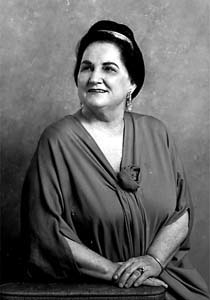
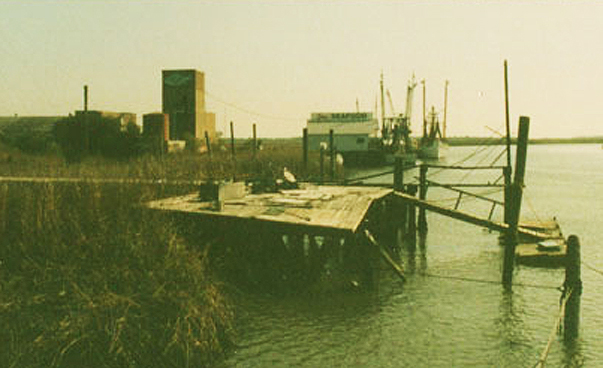
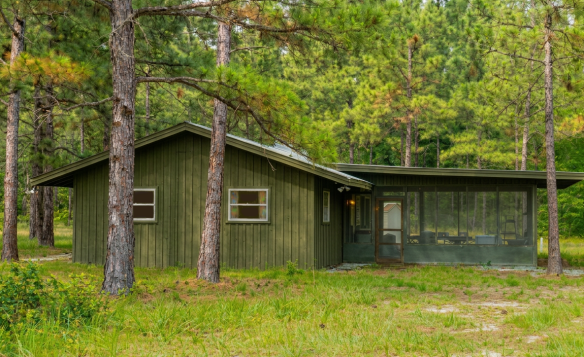
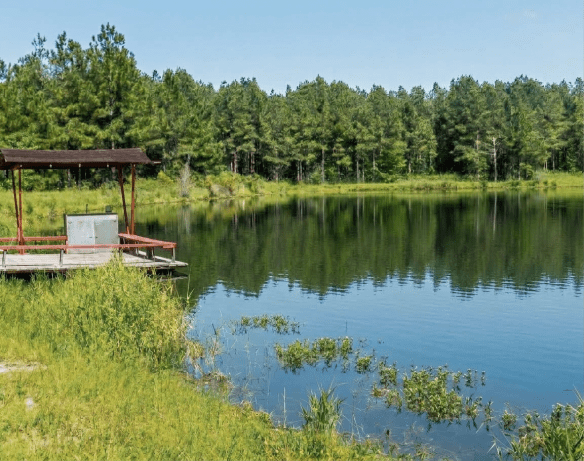
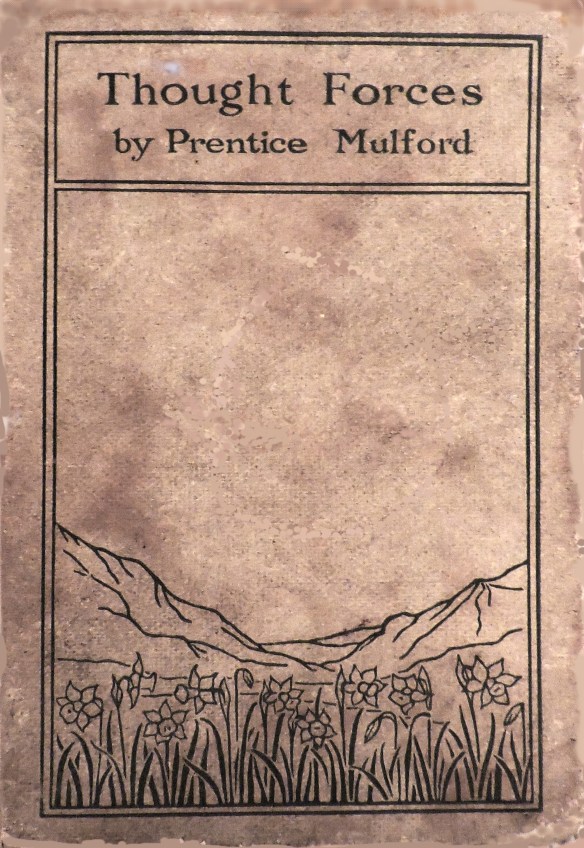
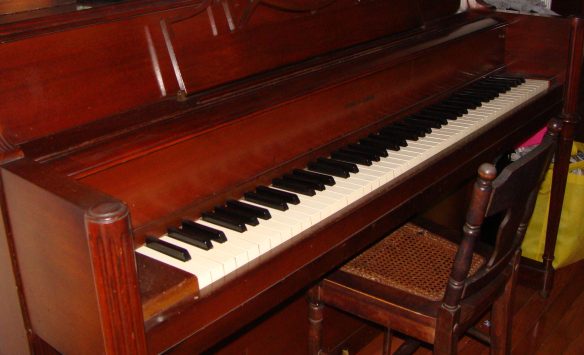
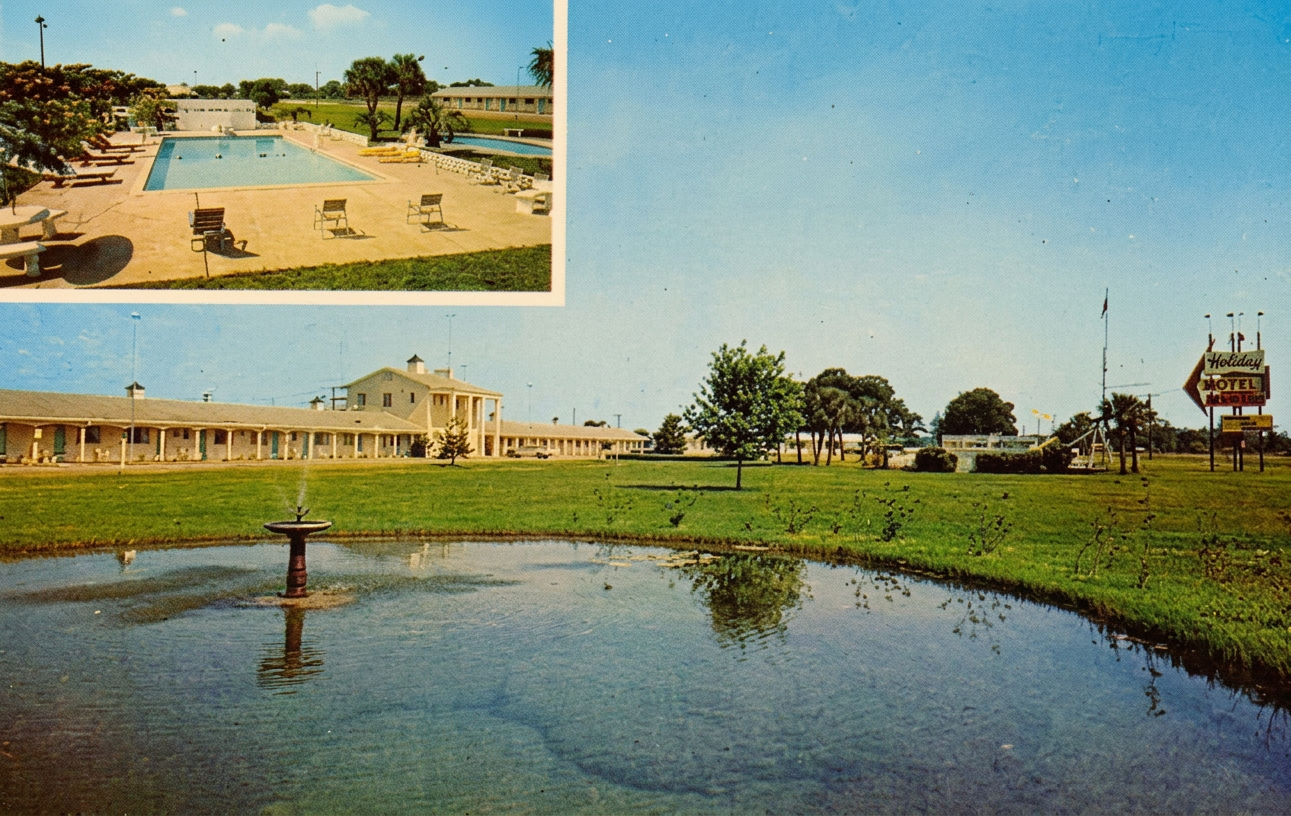
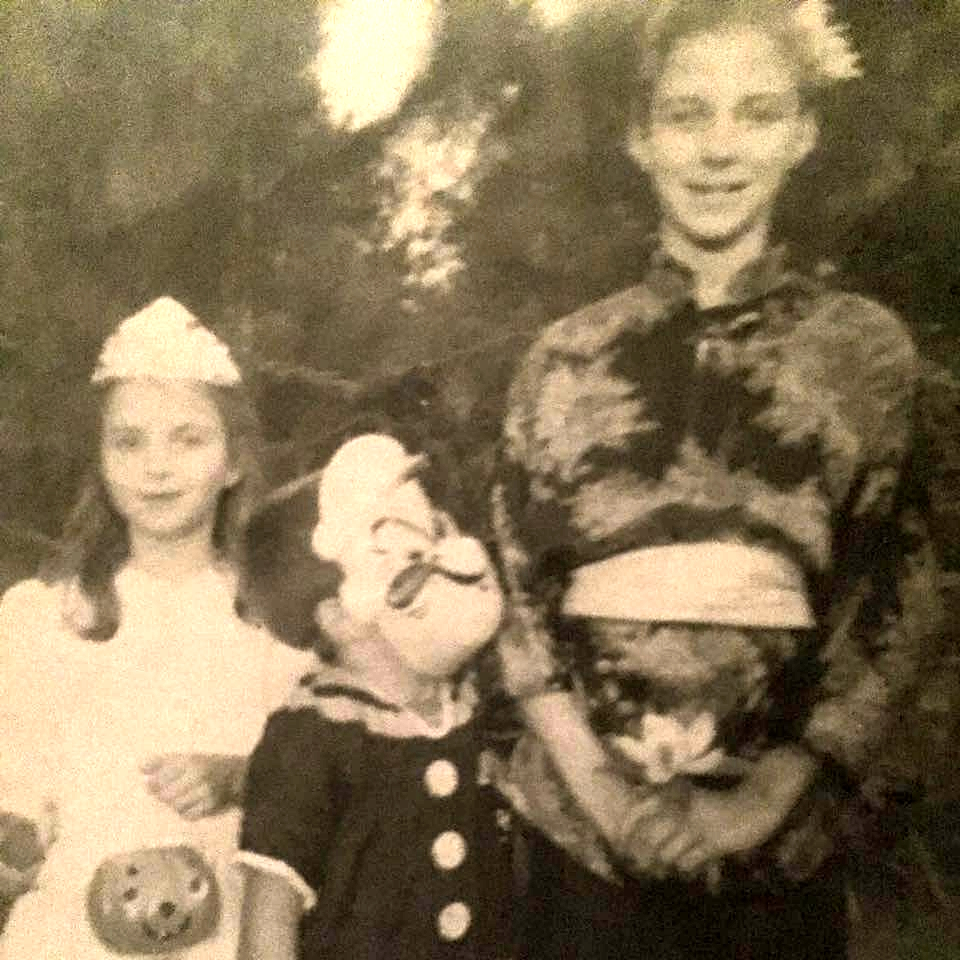
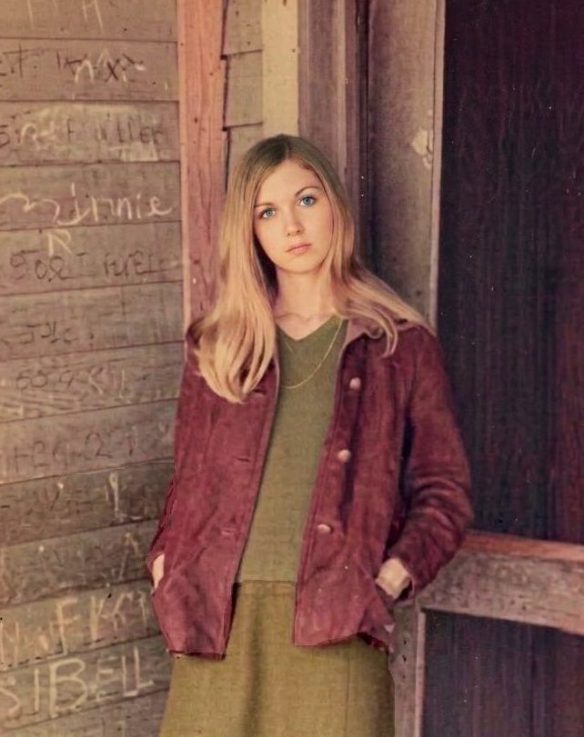
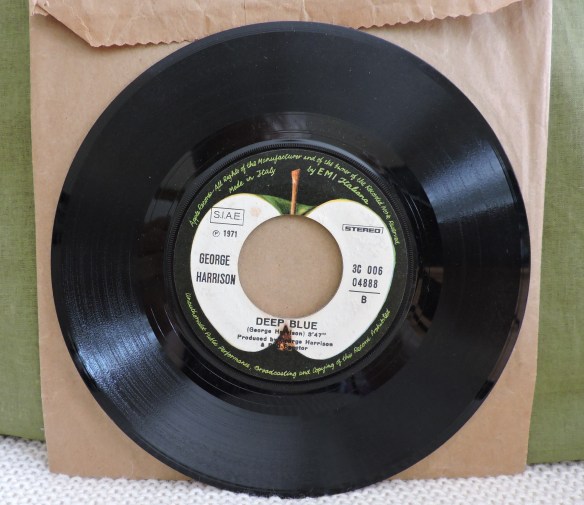
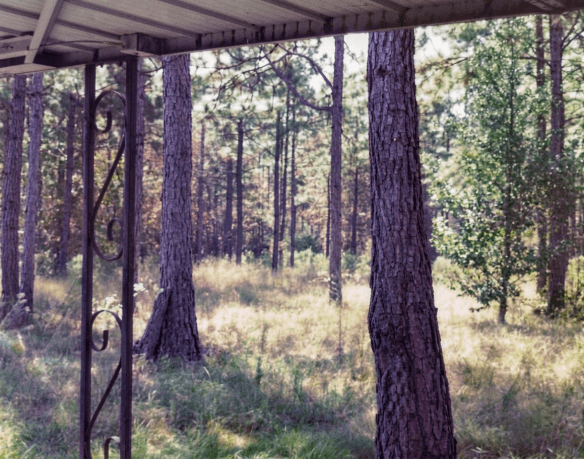
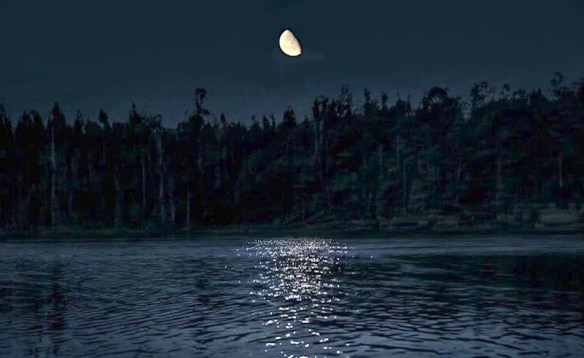
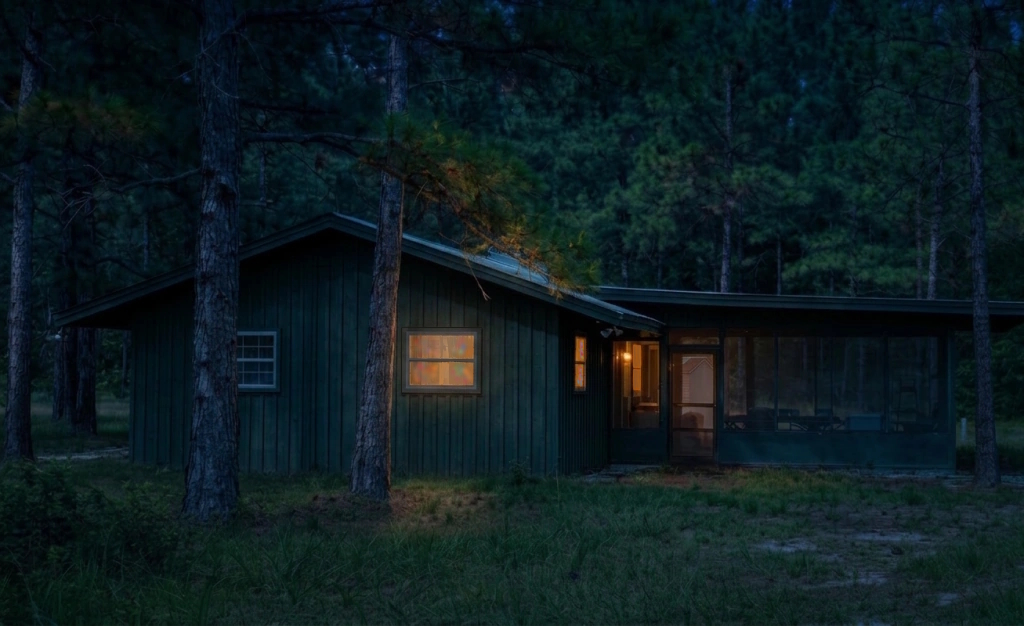
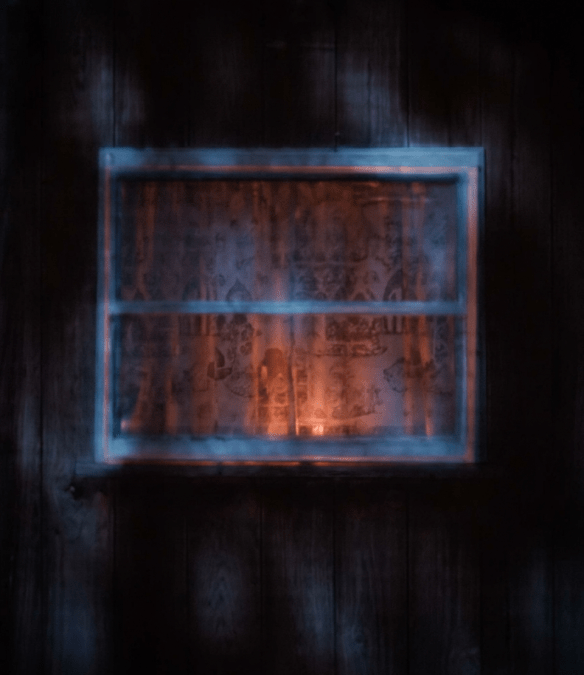
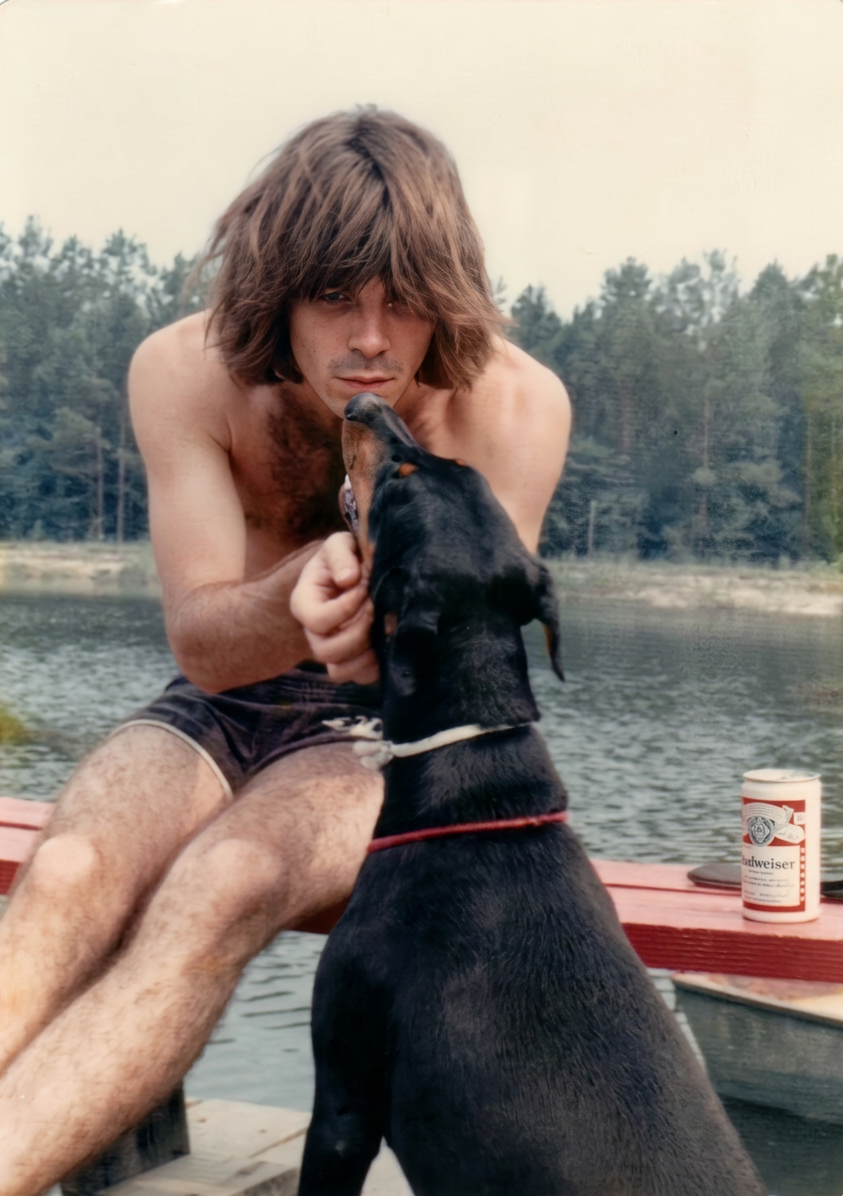
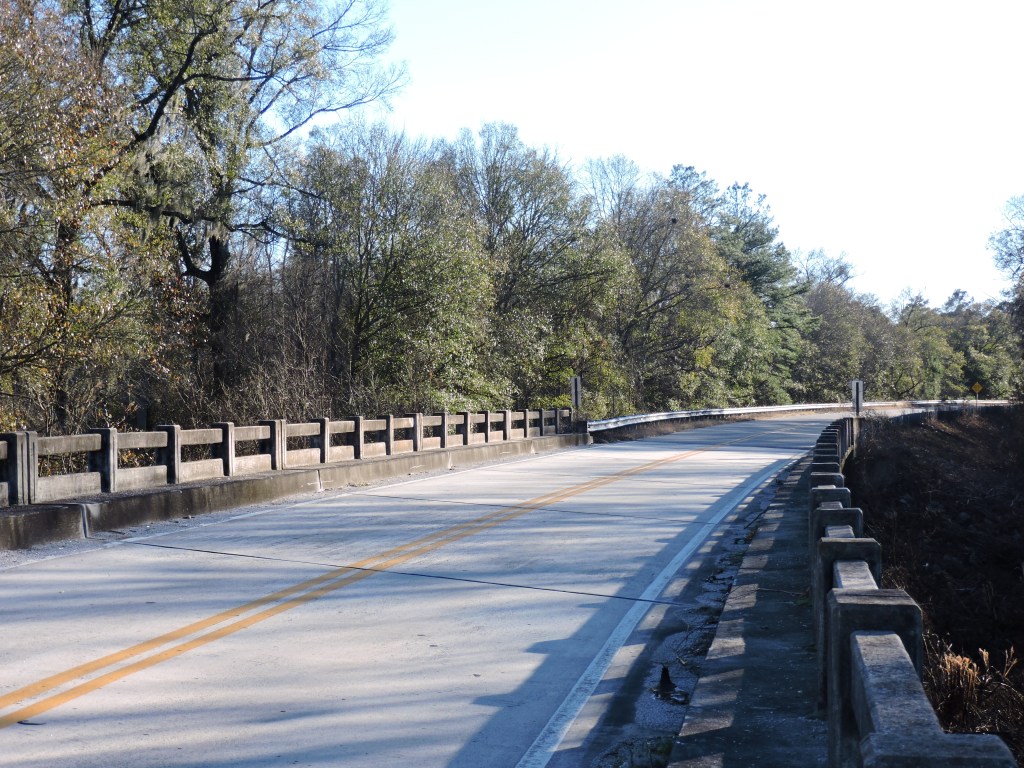
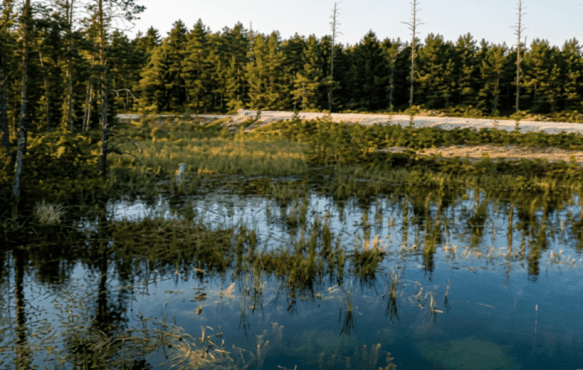
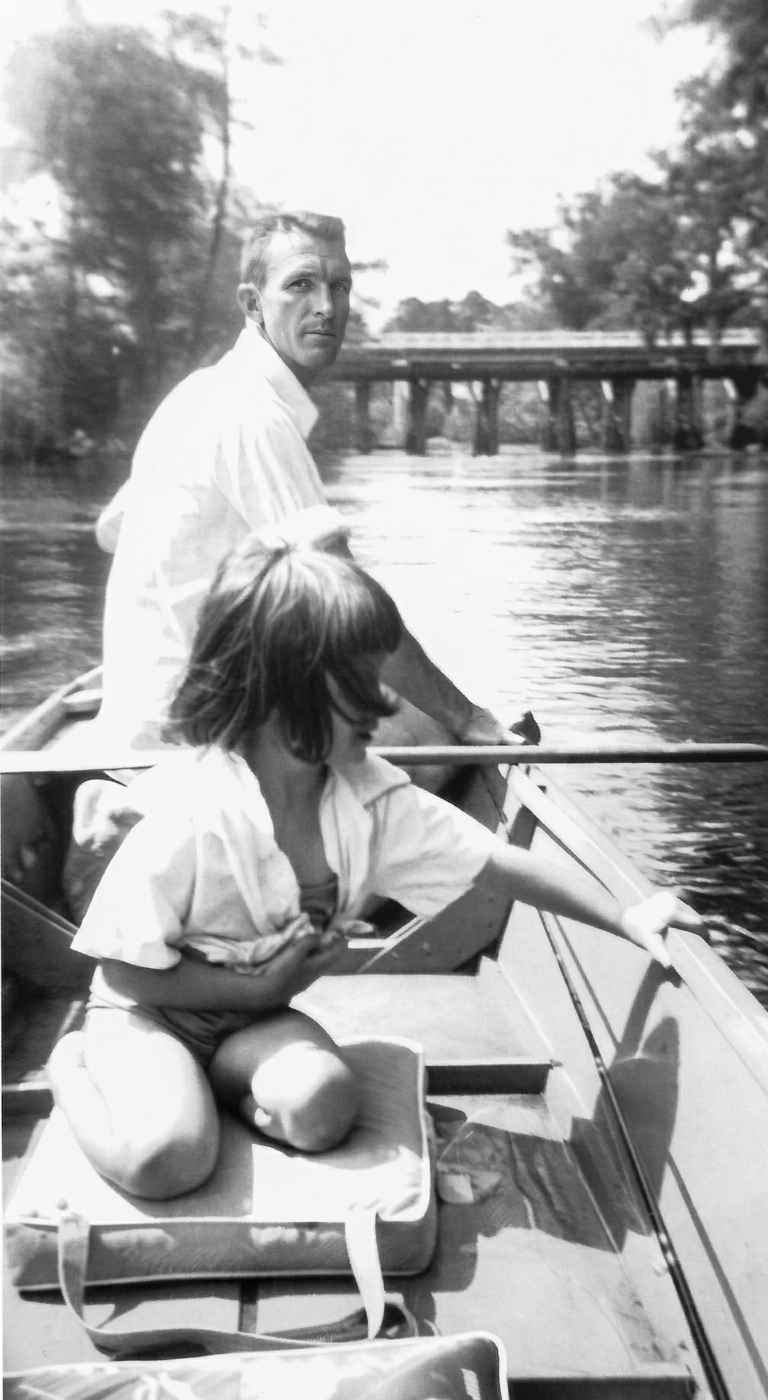
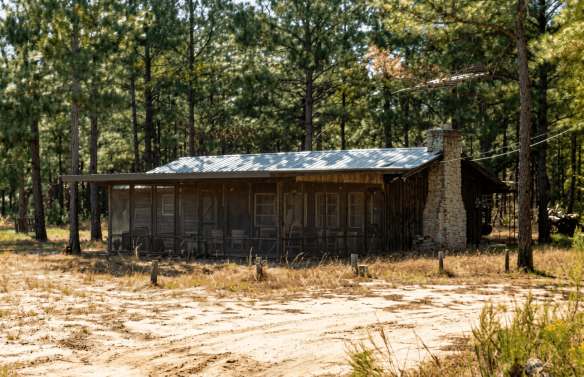
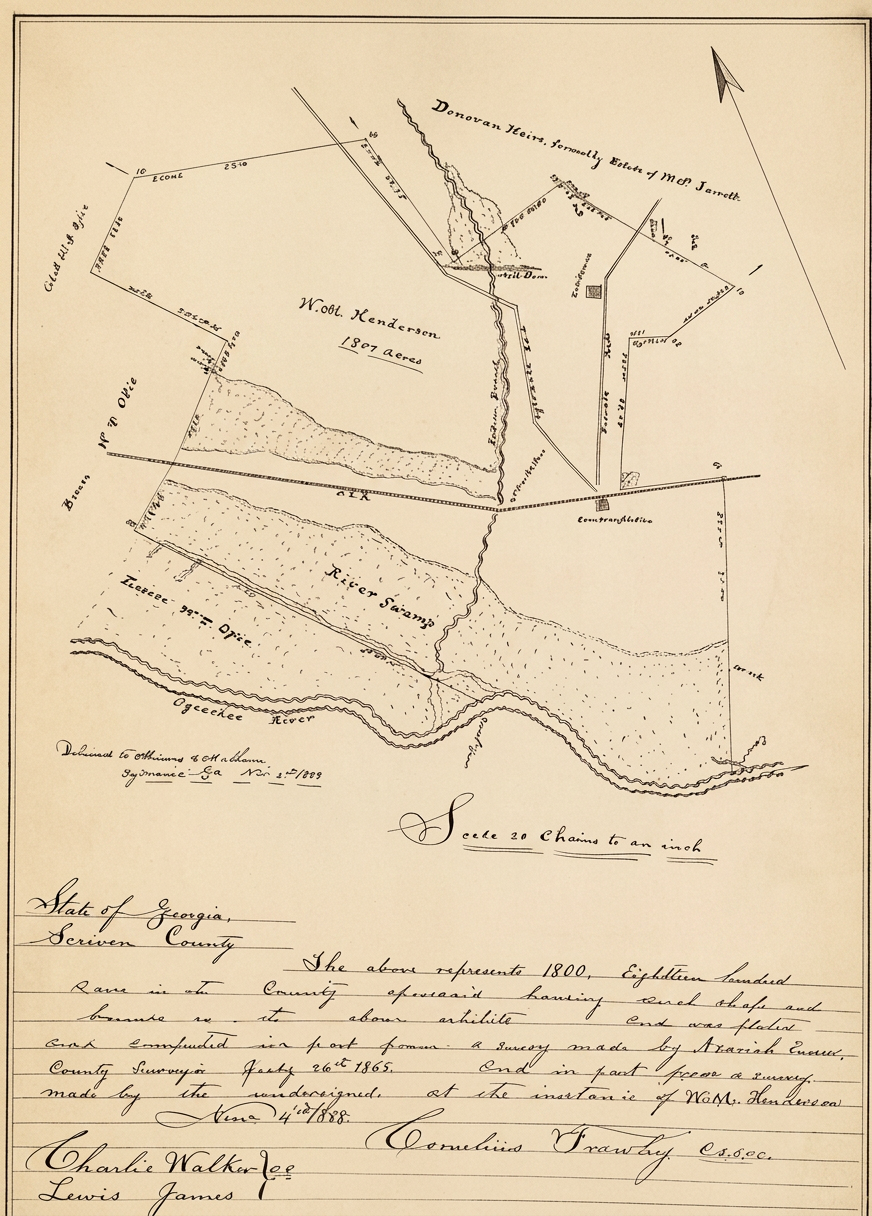
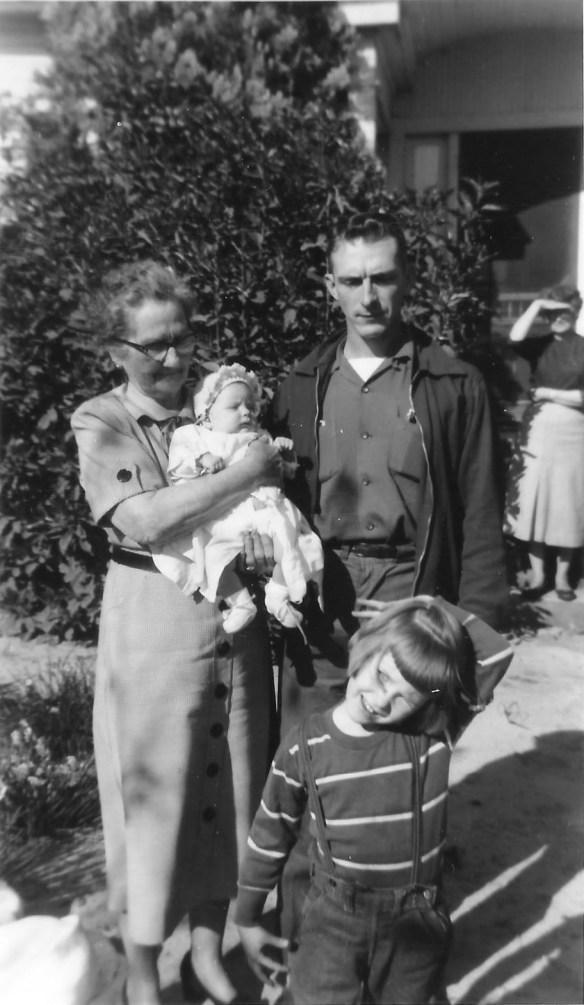
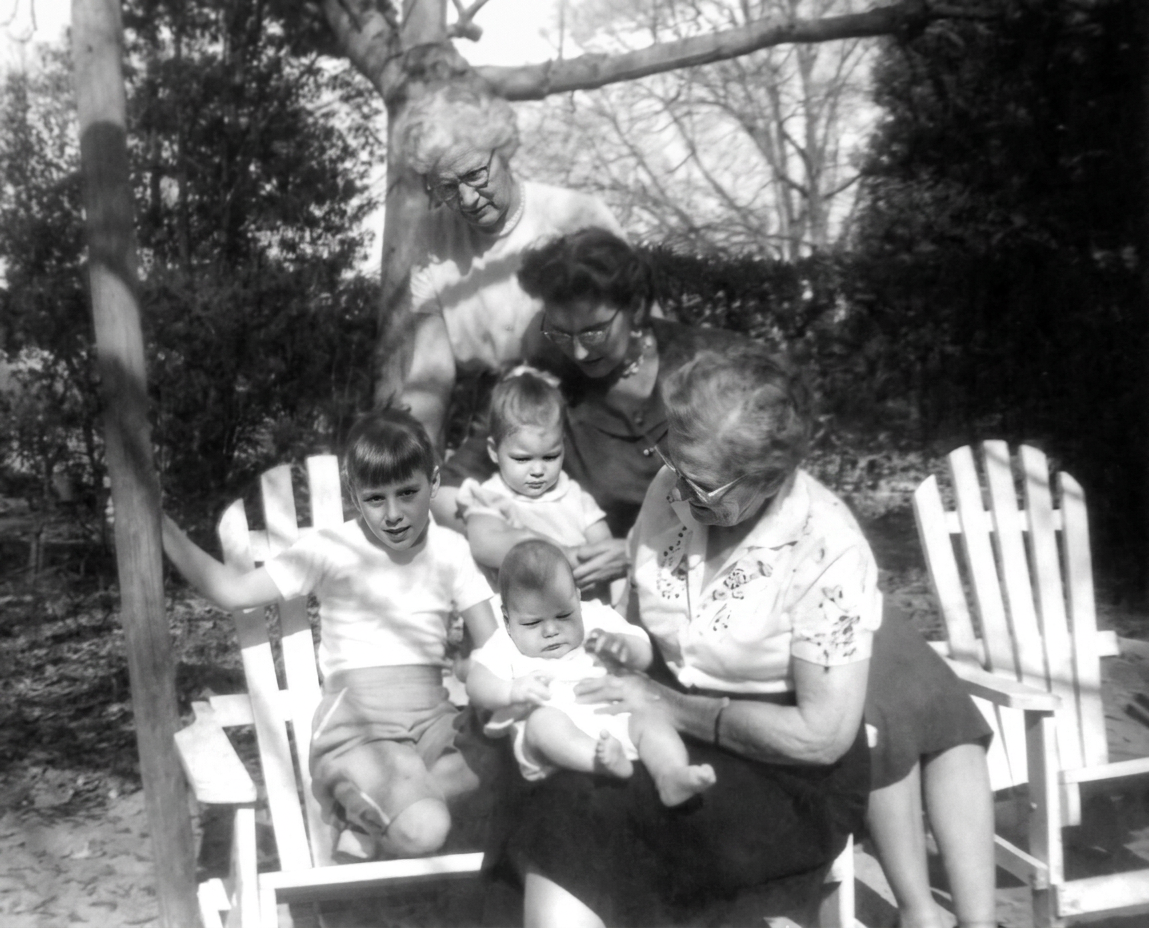
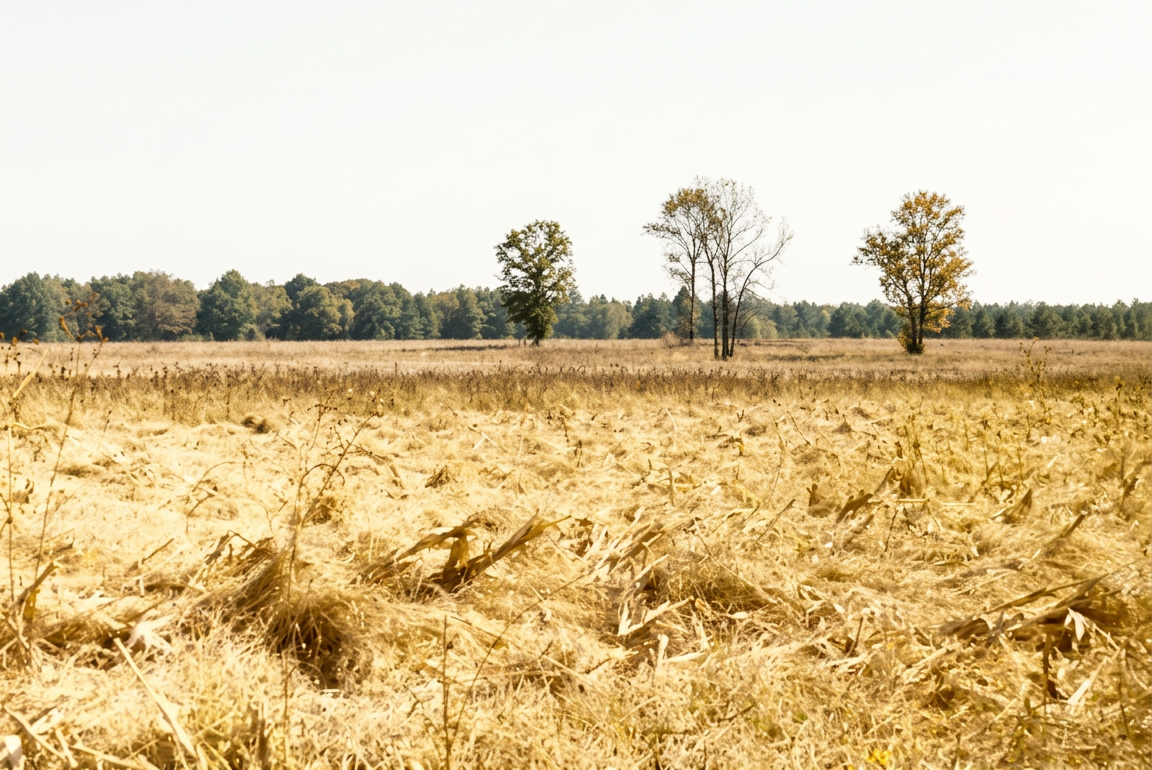


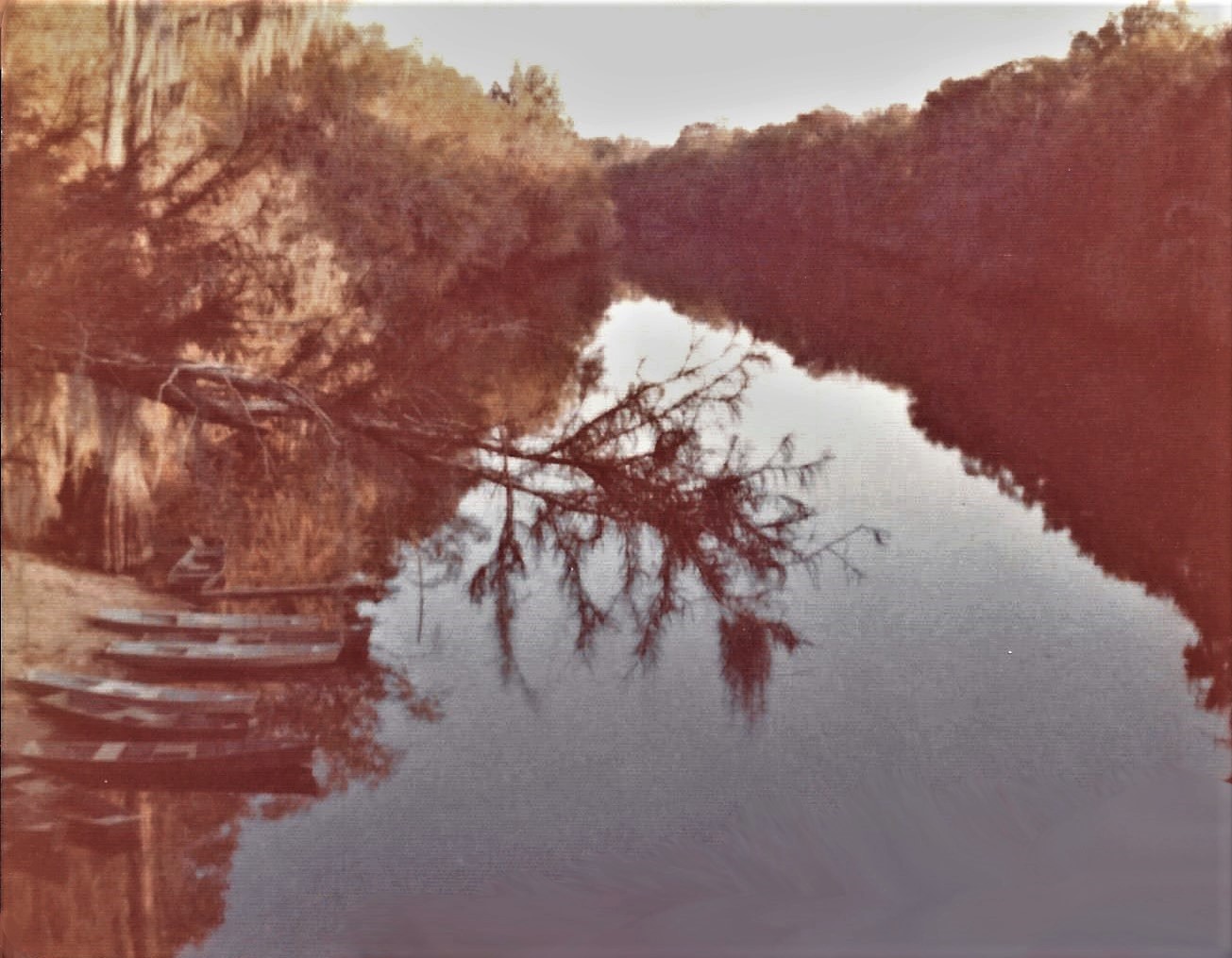
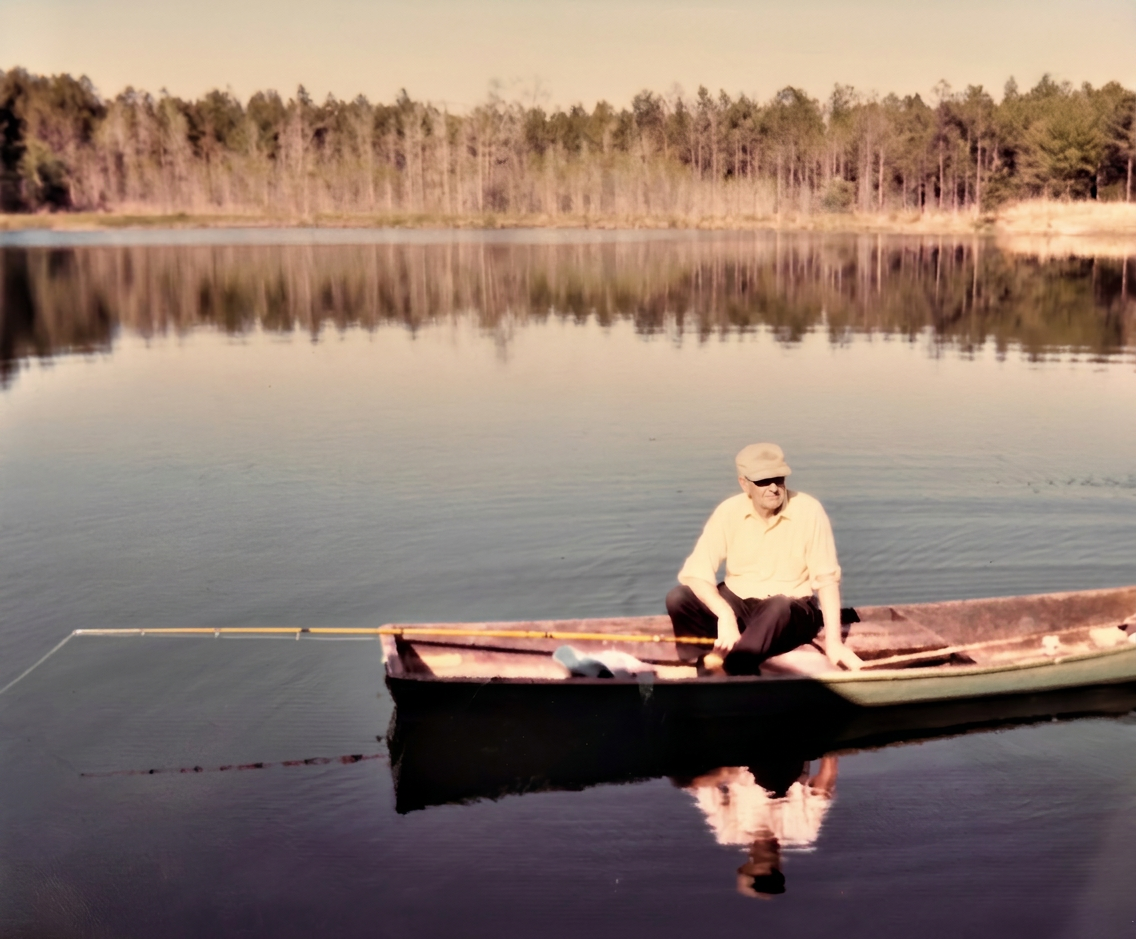
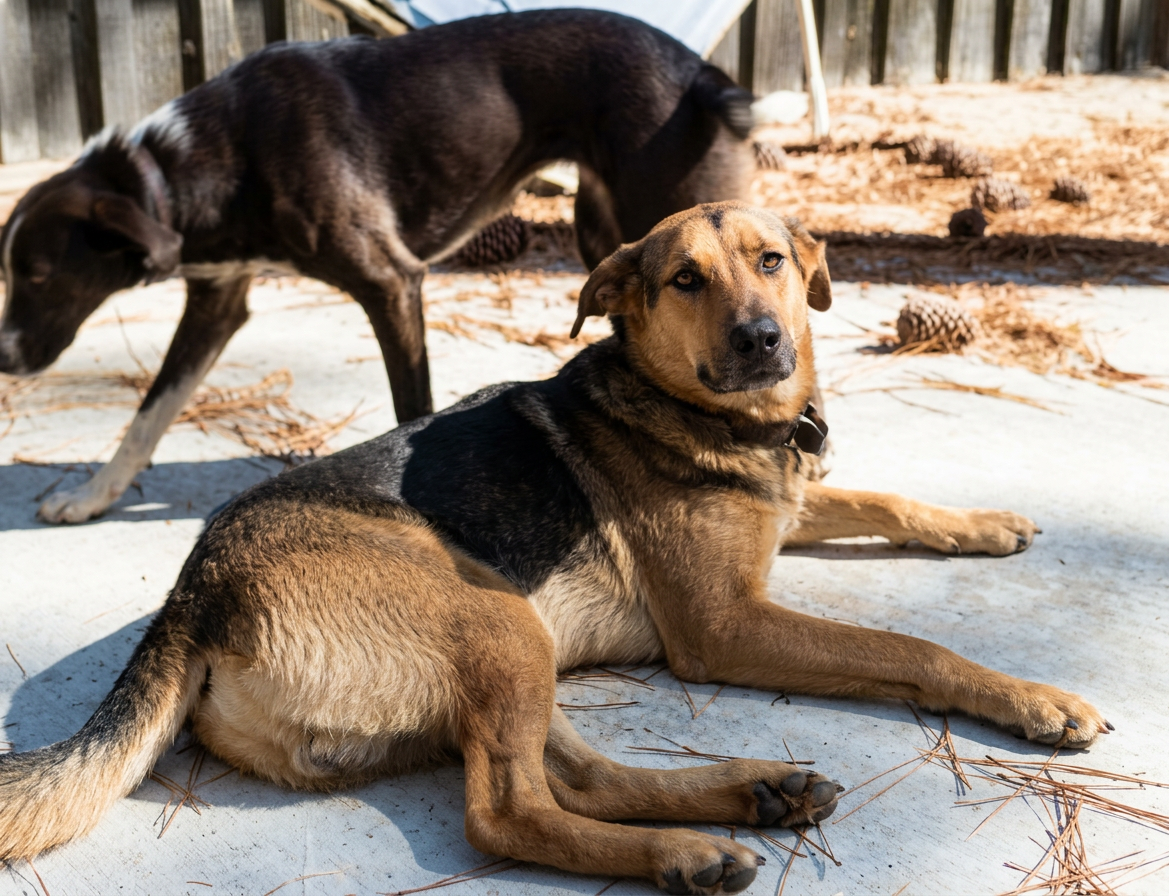


 Cynthia Farr Kinkel