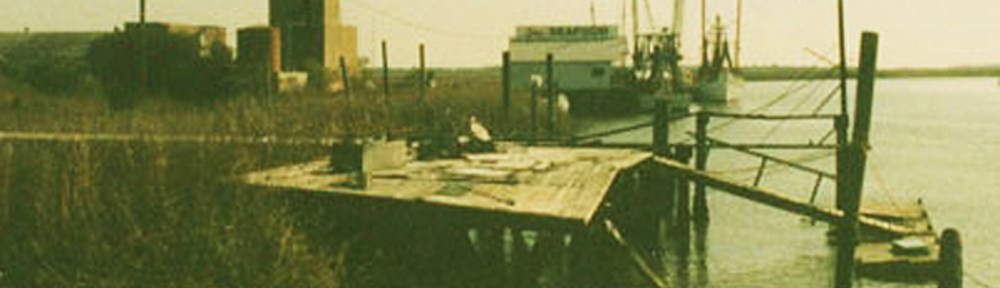
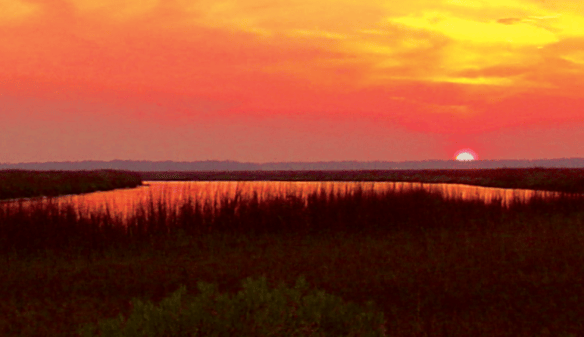
A few years back, after extensively researching the history of Lazaretto Creek, I wrote two articles that appeared in the December 2005/January 2006 issues of The Tybee Breeze Magazine for a monthly column known as “Notes from a Tidewriter.” Of course, there may be individuals on Tybee and elsewhere who could add more accurate details even now, twenty-five years later. I don’t presume to know any particulars other than what I’ve previously written. That January’s article also included “A Song for Lazaretto,” a poem I wrote in 2001, and turned into a song that was originally intended to be a ballad about a forgotten episode of early American history. Portions of the poem have been republished with permission by author Leigh Ebberwein in The Savannah Gondolier, Old Fort Press, Savannah, GA, U.S.A., (2022). The poem along with the personal narrative that accompanies it, as well as the historical account of the history of the quarantines, have been revised and republished several times.
Some people label the poem a ghost story, given the peculiar little twist of how it came to be written, and while I agree it qualifies, I must confess, I’ve never encountered a human ghost, at least not the kind that people claim walk among us as souls of the dearly departed, but as the bitter cold of an Ohio winter piled snow high outside the basement windows I did experience what might be described as a ‘visitation.’ It caught me off guard, but whatever happened, it cured my writer’s block once and for all. Never again will I put off writing when ‘inspiration’ calls. The events below are true but as feelings are subjective, the reader’s free to decide:
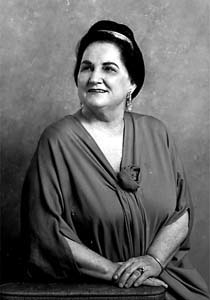
Dec. 17th, 1918 – Jan. 17th, 2001
Savannah Morning News
It was January of 2001, the eve of the death of my family friend and mentor, Emma Thompson Kelly, —Johnny Mercer’s “Lady of 6000 Songs.” She had just been awarded the Proclamation of Georgia’s Entertainer of the Century at her eighty-second birthday party at Hannah’s East on December 17th, 2000. It was her last public performance. By the way, author John Berendt devotes an entire chapter to this regionally beloved character in his first novel, Midnight in the Garden of Good and Evil, published in 1994.
‘Miss Emma’ established regional notoriety throughout the last half of the twentieth century by traveling and playing all over the Southeast. By the time the rest of the country discovered her in the mid-nineties, in John Berendt’s novel, Emma Kelly had long been adopted by most native Savannahians as one of their very own. Since the days of her friendship with the late and legendary songwriter Johnny Mercer, the one who initially affirmed her, and decorated her with the celebrated tag name, she’d tirelessly worked her musical magic in Savannah, and given much of her life to the city. But Statesboro, Georgia was Emma’s hometown.
Most folks who can remember will tell you that besides the daily out of town trips to dance circuit engagements, military bases and clubs, Emma also played for almost every social event up in Bulloch County. This included Kiwanis, Rotary, Lions and Country Club affairs, weddings, school plays, and church services, not to mention every dance recital, talent contest, and stage production in town. Though she constantly burned the candle at both ends, she always seemed to effortlessly enjoy what she was doing. Her rare talent was always available to the locals both young and old, especially during the earlier years when her ten children, all musically talented as well, were growing up in Statesboro.
I also come from a family of musicians. My great Aunt Mary kept her piano in our living room. That’s where I first learned to play by ear, just like my Grandpa. My sister played clarinet. My brother played the drums, and still does. Both of my parents sang (although Dad forgot what a nice voice he had once he became a ‘workaholic’). Momma, who passed away at age 89, had a beautiful voice. In my youth, she and I used to sing together at community affairs. Occasionally, I sang alone. ‘Miss Emma’ was always the accompanist, and because she was also a dear family friend, when she came over to practice, sometimes she’d stay all evening. I remember watching her play, and wanting to be just like her. She had such a gracious way with people, unlike anyone I’ve ever known, and she was always ‘the encourager’. When Emma played for you to perform, no matter what went wrong, she’d hang in there with you, and give you the confidence to pull it off. She’s one of the main reasons why I ever sang, and played the piano professionally.
The last conversation I had with her was in the summer of 2000, a month after she’d collapsed from heat exhaustion during a Fourth of July performance in Savannah’s Forsyth Park. She told me she was slowing down, getting tired (imagine that!), but how excited she was that all of her recordings had finally been released as a CD. She asked me if I had been doing anything with my music or my writing. I was proud to tell her about our band’s CD release in 1999. She said that I had better get over to see her at Hannah’s next time we were home. Around Thanksgiving I learned that her health was failing fast.
In late December I called again to inquire, but was told that she’d collapsed again after her birthday party on the 17th, and had to go to the hospital. When I finally got through to her agent, Louis, he said she’d just gotten home only a few moments before, but was still too ill to talk, and had gone straight to bed. I told him to tell her that I’d called, and to give her a big hug. I just knew that she’d recover and be back at it again, like so many times before until my Mom called to tell me she was gone. Before I received the newspaper clippings from home, I’d read about the funeral in the Savannah Morning News online. Suddenly there was a big empty space in Southeast Georgia, and I was hardly the only one feeling it.
Anyhow, the day before Emma died, a winter storm howled around our Silver Lake home in Northeast Ohio, and as it seems writers just have a way of accumulating the written word in every form imaginable, (and pack rats eventually do run out of storage space), I was downstairs in our basement carrying out a New Year’s resolution to clean out my desk. As I sorted through papers, pictures, and junk mail that had accumulated in the middle drawer, I came across a small pale-blue pamphlet. Immediately, I remembered picking it up at the Tybee lighthouse and Museum the summer of 1999. As a Georgia transplant with family near the coast, I was always grateful to be able to visit, and we usually did so with the kids each year. This little piece of Tybee provided a warm and familiar diversion on such a chilly day.
It contained a short summary of the history of the island, much of which I knew, but much to my surprise, it also mentioned “a quarantine” that once operated on the far west side, —it was just a brief notation, and though I’d grown up in the area and been visiting Tybee since my youth, it was news to me. As research usually took precedence over cleaning, I abandoned my project, and pulled out my southern history books. It was about that time that my sister and I were researching our family’s Patriot roots, so I had plenty to choose from, and websites to investigate. I spent the rest of the evening reading not about the lazaretto, but about the founding of Savannah, trade and shipping in the eighteenth and nineteenth centuries, and the early years of colonial life in Coastal Georgia. I decided I might find more information about the quarantine at the local library, and spent the better part of the next snowy afternoon scouring books and public records only to discover this wasn’t just one of the most sparsely documented of historical sites, but the details surrounding it seemed non-existent. I gathered what I could and headed home.
That second evening around 9:30 p.m. after everyone else was in bed, I went back to the basement, finished putting my desk in order while organizing my thoughts, and sat down to write. I’d decided to compose something about what I’d read of the history of Savannah, and the surrounding area including Lazaretto Creek. Of course, I’d always enjoyed the beach, the down-front scene, eating in island restaurants, biking, swimming, crabbing and fishing, boating on Back River, even sailing off Tybee’s North End in a Hobie cat, but I’d never set foot in the marshes or gone on a dolphin tour. So, I purposed to describe the place as best I could, knowing from experience that if you’ll just start writing, the tale eventually unfolds…
I’d barely gotten the words of the first two lines down, when a strange thing happened. As soon as I began to identify with someone who might have been quarantined, I began to feel uneasy, and what began as a slight tingle, turned into something that I can only describe as a ‘depressing heaviness,’ —then as if someone had slipped up beside me and tapped me on the shoulder, there was a whisper in my ear.
The words were gibberish, but suddenly, I was shoulder-deep in murky rushing water with tall green grasses all around; the shell-banks smelled of salt, and much to my horror, I was being sucked down by the undertow. For several anxious seconds, I felt I was drowning, and overcome with a disconcerting urge to vomit. Then as suddenly as it came, the sensation was gone. I sat there wondering if maybe I was coming down with something. Or was it a heart-attack? A stroke? Some type of “sympatric” reaction? — Even now, I don’t recall as a writer, experiencing another such an incidence of unsolicited sensory perception. Whatever it was, it was very real.
A few minutes later, feeling myself again, I went upstairs for a drink of water, and hurried back down to my computer to read over what I’d typed:
“It runs from the mouth of South Channel, with the tide it meanders round.”
It wasn’t late, and I was anything but sleepy, so braving the elements and the subject matter, I decided to keep writing in case something else happened. Except for the fact that I couldn’t stop the flow of the ten-versed poem that emerged, the rest of the night was “uneventful.” Next day, my mom called from Georgia to tell me that Emma Kelly had died.
Now, I don’t believe for a minute my rather clairvoyant experience had anything to do with Emma other than the fact the eerie incident served to mark her passing for me. The strangest thing was that exactly one year later to the day, January 17th, I found myself living on Tybee Island. In the months that followed, I thought about “Miss Emma” every time I passed the Pirate’s House in Savannah where she’d played at Hannah’s East, wishing I’d been able to see her once more before she died. And each time I crossed Lazaretto Bridge that first year, or drove Highway 80 East through the marshes, I flashed upon that night in the basement.
It wasn’t until 2005 however while working on a column for The Tybee Breeze Magazine that I learned the place where the fishing fleet currently docks was, in fact, rumored to be haunted. People didn’t talk much about it, but while chatting with friends at a local bar one evening, I was shown a Savannah Morning News article that reported skeletal remains being unearthed at the time the pilings were dug in 1956 for the new steel bridge over Lazaretto Creek. Being seven when it was printed and apparently buried in local newspaper archives, I’d have never thought to look for it from Ohio. Another individual mentioned lepers living in certain places on the island in conjunction with the quarantine. Still another chimed in to tell me about a recent scare they’d had in an old house on Officer’s Row known as the Marshall House on Tybee’s North End.
While completing a six-month series on historical pirates as a promotion for the island’s first pirate festival, I’d talked with Paula Devivo about doing a series called “Ghosts on Tybee,” —you know, for quieter winter nights? I mentioned I might have something to get things started, but after hearing about the incident at the Marshall House, I thought to start with Officer’s Row. Then, I remembered, it being the holidays, the owners were likely out of town, so on a whim, I ended up at Lazaretto Creek. As I walked around that afternoon, I learned that long-time owners at the marina claimed to have seen at least one dark figure with tattered clothes walking out on the docks in the wee hours at night. I was also told that on two occasions, such a figure walked right into the establishment, stood and stared in silence, and disappeared, —a mystery to this day…
I guess if ever a place had reason to be “haunted,” this might be one. Granted, it isn’t Gettysburg, Hiroshima or Dachau, or a place where millions suffered, and I don’t wish to labor the point, but brutal necessity paid a brief, costly visit to Lazaretto Creek – another lonely little corner of the world, where outcasts perished. In those days, there were others along the eastern seaboard including Charleston, Philadelphia, and New York, and for anyone on the outskirts of the New World after traveling across the vast ocean in hopes of finding a better life, it was a miserable fate. Now, imagine being a victim of the African slave trade, torn away from loved ones and homeland, thrown into bondage and now languishing in chains from an illness you’d possibly contracted while lying in the stench and filth below deck with the rest of your unfortunate comrades.
Granted, the poem I wrote that snowy night in Ohio was influenced by what I “felt and believed,” but try reading it on those docks at sunset, then, tell me how you feel.
Lazaretto Creek Marina; Memories of Captain Mike; Lost Souls
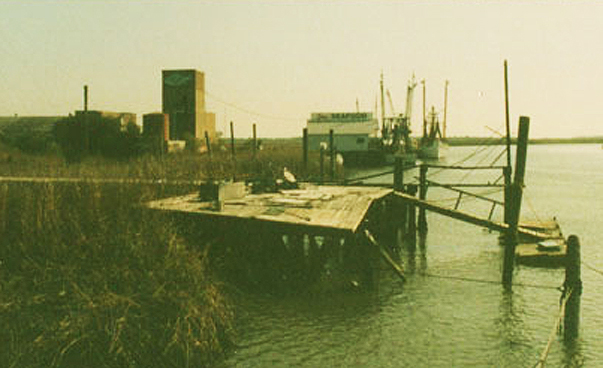
Captain Mike Scarbrough and his wife, Iris, first moved to Tybee in 1992, hoping to build a future with their young daughter, Lisa. They bought their property out at the Lazaretto Creek Marina from W.G. Smith, a local resident and fisherman who owns and operates the vessel known as the Agnes Marie, with his partner J. B. Griffle. The premises needed so much work that Iris says her initial response was just to hop in the car and head back to Atlanta. She recalls turning to Mike, and cringing, “Are you sure we really want to do this?”
The Scarbroughs worked a year or so restoring the docks and the old buildings at the marina while living on their boat, and eventually, converted a small house near the water into a bar with an office. They called it Mike’s Place. According to Iris it wasn’t much to look at, in fact, she says it was ‘a dump’ — if they had five customers on the weekends, they thought they’d been ‘discovered.’ Mike’s Place only served sandwiches, prepackaged snacks, and beer, but the fishing crowd at the docks always appreciated the little bar, and the regulars were friendly. The Scarbroughs continued to reclaim the grounds, and started a dolphin tour business, and over the course of the next decade, things really began to shape up. A seafood market also opened in another one of the buildings.
The fact that Lazaretto Creek had a few skeletons in its closet was never an issue for hardworking locals who took things in stride. However, both Mike and Iris were quick to mention that several strange things happened during the first years they lived on the property.
There are two incidences in particular. The first took place one night around three in the morning, when Mike happened to look out a back window of the house toward the creek. He thought he saw someone walking around on the dock — maybe, a couple of people. No one was supposed to be out there that time of night, so Mike went to investigate. He headed down the plank walkway, ready for a confrontation, only to discover that no one was there. No one was anywhere around. Mike said he stood listening for a few moments to see if he could hear anything, but all was quiet, and there was no sign that any boat had left the dock. “For the life of me,” he said. “I couldn’t figure out where they might have gone.”
The second incident happened sometime later when the Scarbrough’s daughter, Lisa, was in high school, and had a friend over from Savannah. They were sleeping in Lisa’s bedroom about three o’clock in the morning, when the friend was awakened with a start. Glancing around, she said she saw a tall, wide-eyed Black man in a tattered dirty shirt standing in the doorway of the room. She grabbed Lisa and shook her, and the two of them woke Mike and Iris with their screams. The lights came on, but a thorough search turned up nothing. It was the last time the stranger was seen inside the house, but Mike had to stand vigil for a while so his daughter could get to sleep.
In 1995, the marina hosted the U.S. and International Team trials, and in 1996, the yachting events of the Summer Olympics were held there, but it was when Mike took a group from Good Morning America out on the S.S. Dolphin for a tour, that his “Dolphin Adventure Tours” really took off. Captain Mike and First Mate, Iris, decided it was time to let someone else take over their eatery at the marina.
Joel Solomon moved in at Mike’s Place, renamed it “Cafe Loco,” and added live music on the weekends. Working late hours, after the musicians and the employees left, Joel would soon have his own encounter with the Scarbrough’s eerie night visitor. Alone in the bar after closing one night, he was cleaning behind the counter when he heard a noise and looked up to see a man whom he didn’t recognize standing just inside the entryway, — an African American man wearing strangely tattered clothes. He didn’t come into the bar; just stood there for a moment like he was lost. Joel raised his voice to say he was closed, and was about to ask if the man needed help, when the man turned and slowly began walking beyond the inner wall as if he were headed to take a seat in one of the booths. When Joel left the counter to make sure his message was clear, the front room was empty. The main door, secured earlier, was still locked. According to Captain Mike, it prompted Joel to search the premises up and down before leaving.
There’s been speculation throughout the years about the whereabouts of the mass grave sites associated with the quarantine. It’s generally believed the old buildings stood in a fairly protected area, near the river channel under the trees. If there were unmarked graves toward the marsh itself, most likely they were washed away by the tides throughout the years. It’s also quite possible that graves were located where the new bridge now stands, and were unearthed when it was constructed. The Savannah Morning News article reported bones were discovered in that location, bobbing up from the ooze.
The Scarbroughs said a group from England showed up a few years back, looking for the unmarked grave of a British soldier whom they believed was buried somewhere on the grounds. Members of the group searched diligently, but in vain, in fact, to this day, no remains have ever been located in or around the present-day grounds of Tybee Marina or in the adjacent hammocks. Considering there was over a hundred acres in the original tract bought from Josiah Tattnall in 1767, —a lot of ground to cover, —and though current efforts are underway to further commemorate the site, and possibly rescue what has yet to be discovered, most locals doubt future searches will turn up more than continued speculation.
To my knowledge, the ‘ghost’ who paid the three a.m. visits to the Scarbroughs and Joel Solomon hasn’t been seen lately. Iris once said it was probably because of all the ‘live’ activity on the premises at night. Captain Mike’s Dolphin Adventure Tours celebrated twenty years on Tybee in 2012. Though Mike passed away in 2021, and Iris Scarbrough in 2019, the business they pioneered continues to operate successfully, in fact there are now two dolphin tours out of Lazaretto, including Captain Mike’s, and Captain Derek’s. By that time, Joel Solomon had already sold Café Loco, but the location has faithfully housed two restaurants since – Coco’s Sunset Grille, (now closed), and Bubba Gumbo’s, a long-standing local favorite. Established in 1997 by marina owner, Paul Burns, it closed for a decade, and reopened in 2015. These days, besides Bubba Gumbo’s, the marina hosts both dry stack and wet boat storage, a bait and tackle store, laundry facilities, and access to Topsail Bar & Grill. In short, it’s seasonally flooded with fishing and water sports enthusiasts, hungry tourists, and excited sight seers.
I don’t purport to have knowledge about what else locals have encountered out there at night, although there have been reports of UFO/UAP/USOs zipping across the marsh. As Iris said, maybe there are just too many people around these days for a ‘lost soul’ to feel comfortable.
RIP, all.
* * *
*Copyright 2012-2026, Real Spooks/Cynthia Farr Kinkel
(Portions of the above also story also appeared in The Tybee Times, 2009)


Very interesting!
LikeLike